
Key takeaways
- Baek Ki Tae and Cheon Seok Jung's relationship has inverted over nine years—from Baek looking up to Cheon now relying on him for protection against the rising threat of Hwang Dae Shik.
- Pyo Hak Soo transforms from Season 1 rival to Season 2 subordinate under Baek Ki Tae's authority as KCIA acting director, shifting from ambition to pure survival instinct.
- The three actors reveal their characters' relationships are driven by calculation and strategic necessity rather than genuine loyalty or gratitude.
- Made in Korea 2 premieres with episodes 1 and 2 on September 9, followed by pairs of episodes released every Wednesday for a total of six episodes.
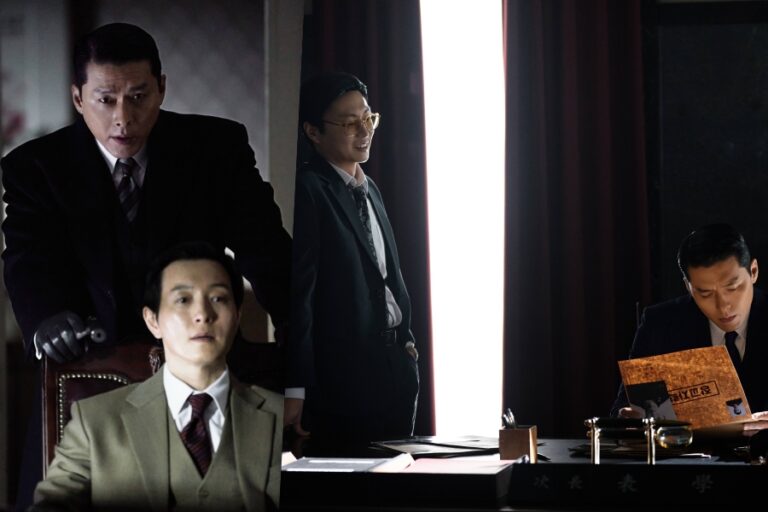
“Made in Korea 2” explores how nine years fundamentally reshape the alliances and hierarchies among its three central figures. The series jumps from the turbulent 1970s setting of Season 1 directly into a new era where the power structure that defined the earlier installment has inverted, fractured, or transformed entirely.
In Season 1, Baek Ki Tae (Hyun Bin) embodied raw ambition—a man climbing toward wealth and control while prosecutor Jang Geon Young (Jung Woo Sung) dedicated himself to blocking that ascent. Season 2 opens with Baek Ki Tae now occupying the peak of power; Jang Geon Young preparing a counterattack from outside; and Baek Ki Hyun (Woo Do Hwan), Baek Ki Tae’s younger brother, pursuing his own distinct route to influence. The widening rifts between these competing interests drive the narrative forward, destabilizing the Korean Central Intelligence Agency from within.
The Inversion of Dependence
From Supplicant to Essential
The relationship between Baek Ki Tae and Cheon Seok Jung (Jung Sung Il) operates as the emotional core of this power shift. In Season 1, Baek Ki Tae looked upward toward Cheon Seok Jung, a man entrenched in the Blue House as chief of staff—the true No. 2 figure wielding near-absolute authority behind the scenes. Hyun Bin described the reversal: “In Season 1, Baek Ki Tae was the one looking toward Cheon Seok Jung, but in Season 2, I felt that Cheon Seok Jung also comes to rely on Baek Ki Tae.” The actor captured how time and circumstance had swapped their positions of need.
The Threat From Above
This dependence arises from immediate pressure. The arrival of Hwang Dae Shik (Heo Jung Do) directly threatens Cheon Seok Jung’s grip on his No. 2 seat, leaving him vulnerable for the first time. Baek Ki Tae, who has stood loyally beside him for nearly a decade, becomes both shield and instrument. Yet Jung Sung Il offered a starkly different interpretation of this dynamic, one that reveals Cheon Seok Jung’s true calculations: “It doesn’t matter to Cheon Seok Jung who sits in that position. Baek Ki Tae has simply taken the seat that Hwang Guk Pyeong once occupied.” He continued, “Baek Ki Tae is a card he can discard at any time if the situation becomes unfavorable,” exposing the transactional nature beneath the surface alliance.
Psychological Warfare Over Loyalty
Jung Sung Il’s reading suggests Cheon Seok Jung views his closest ally as fundamentally expendable. The security that Baek Ki Tae might feel from being needed—from having moved from supplicant to essential player—is illusory. Cheon Seok Jung requires him only for the moment when Hwang Dae Shik poses a threat. Once that crisis resolves or circumstances shift, Baek Ki Tae becomes a liability to be removed. Rather than genuine partnership or gratitude, Season 2 trades in strategic maneuvering disguised as loyalty. The men understand one another well enough to cooperate, yet neither trusts the other beyond immediate utility. This psychological battlefield—where every gesture conceals calculation—forms the backbone of their conflict.
The Rival Becomes the Subordinate
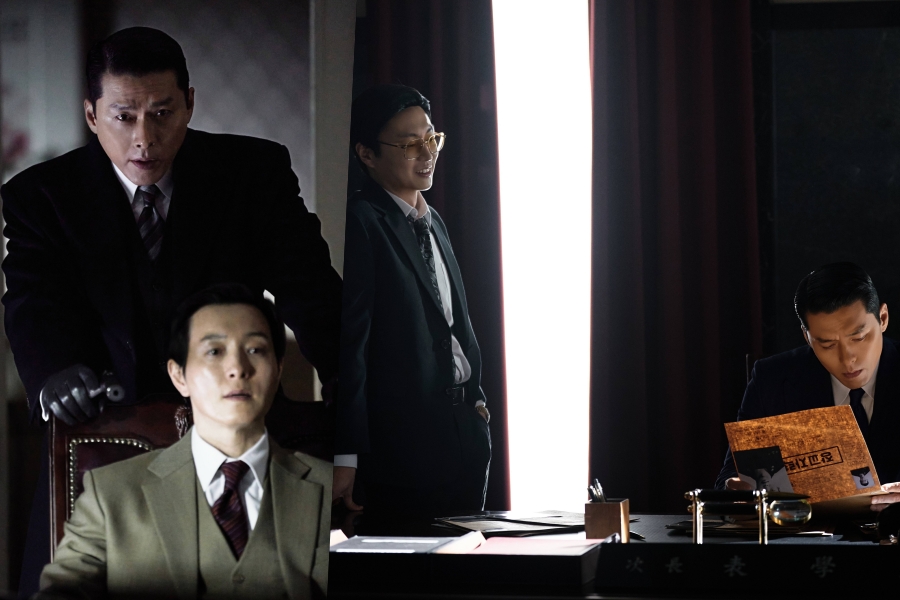
Pyo Hak Soo (Roh Jae Won) undergoes perhaps the most visible transformation across the nine-year gap. Season 1 positioned him as a fierce rival to Baek Ki Tae, locked in direct opposition within the agency. Season 2 inverts this hierarchy entirely: Baek Ki Tae now sits as acting director of the KCIA, and Pyo Hak Soo serves directly beneath him. The physical transformation makes this shift unmistakable—new hair, glasses, and an altered appearance signal that this character has been fundamentally reshaped by the years between seasons.
Roh Jae Won articulated the emotional weight of this reversal: “They were rivals in Season 1, but in Season 2, Baek Ki Tae is his superior. The subtle discomfort that comes from that, along with the precarious situations where he crosses that boundary, is the biggest difference.” The actor highlighted not dramatic conflict but discomfort—the low-grade tension of a former peer now issuing orders, of having to navigate subordination after years of equilibrium.
Survival As a Guiding Principle
The psychological cost of this demotion shapes how Pyo Hak Soo navigates his circumstances. Roh Jae Won explained his approach to the role: he repeatedly reminded himself, “I have to survive this game somehow. I’m smarter than you, and my choice is the right one.” This internal monologue reveals a character who has abandoned any illusion of winning or climbing further—survival itself has become the sole objective. Every decision filters through a calculus of what keeps him alive and functional within a hierarchy he no longer controls.
Director Woo Min Ho supported this characterization, describing Pyo Hak Soo as someone who “plays a much more pivotal role in Season 2 than in Season 1,” despite his diminished formal position. The director added that he functions “like a trickster ball that could bounce in any direction,” suggesting unpredictability born from desperation. A character fighting for survival rather than advancement operates by different rules—less bound by loyalty or conventional ambition, more willing to pivot when circumstances demand it.
The KCIA As A Pressure Cooker
All three men—Baek Ki Tae at the top, Cheon Seok Jung in his precarious No. 2 position, and Pyo Hak Soo scrambling for footing below—find themselves contained within the same institution. The KCIA during this period of Korean history served as a crucible for power struggles, where the stakes extended far beyond individual careers into matters of national consequence. Season 1 anchored itself in this setting; Season 2 deepens the exploration of how such an environment transforms relationships forged under earlier conditions.
The nine-year separation allows the narrative to show consequences rather than merely depict them. These men did not simply age in place—they maneuvered, accumulated, lost ground, and adapted. The versions of themselves that appear in Season 2 are products of choices made and pressures endured across the intervening years. Their relationships cannot remain unchanged when their positions have shifted so radically.
Release and Episode Structure
“Made in Korea 2” spans six episodes total. The series premieres with episodes 1 and 2 on September 9, after which new episodes release every Wednesday in pairs. This pacing allows viewers to immerse themselves in the opening power dynamics before subsequent episodes deepen or destabilize them further. The two-episode weekly rhythm sustains momentum without demanding the weekly patience of single-episode drops.
The expanded frame of Season 2 accommodates not only Hyun Bin, Jung Sung Il, and Roh Jae Won but also Woo Do Hwan as the ambitious younger brother and the broader cast that populates the KCIA’s corridors. These characters exist within the gravitational pull of the main trio’s conflicts, shaped by decisions those three men make at higher elevations of power.
Frequently Asked Questions
How has the relationship between Baek Ki Tae and Cheon Seok Jung changed in Season 2?
In Season 1, Baek Ki Tae looked up to Cheon Seok Jung, but by Season 2, Cheon Seok Jung has come to rely on Baek Ki Tae for protection against Hwang Dae Shik, who threatens Cheon's No. 2 position at the Blue House. However, Cheon Seok Jung views Baek Ki Tae as a card he can discard if the situation becomes unfavorable.
What transformation does Pyo Hak Soo undergo between the two seasons?
Pyo Hak Soo shifts from being a rival to Baek Ki Tae in Season 1 to becoming his subordinate in Season 2, as Baek Ki Tae is now acting director of the KCIA. The character undergoes a visible physical transformation with a new appearance including a wig and glasses, and his mindset changes from ambition to pure survival.
When does Made in Korea 2 premiere and how many episodes does it have?
Made in Korea 2 spans six episodes total. Episodes 1 and 2 premiere on September 9, followed by two new episodes released every Wednesday thereafter.
