
Key takeaways
- Kim Young Kwang's "Pinocchio" role as Seo Beom Jo showcased him as a charismatic second lead whose character depth evolved beyond typical romantic rivals.
- His performance as surgeon Lee Hae Sung in "Dr. Romantic" demonstrated his ability to convey both moral conviction and emotional vulnerability during an earthquake crisis.
- Darker roles in "Lookout," "Somebody," and "The Gun" reveal Kim Young Kwang's range in portraying morally ambiguous characters with unsettling edges.
- His recent appearance in "The Impossible Heir" opposite Chae Soo Bin returned him to romantic comedy, a genre that consistently showcases his charm and chemistry.
Kim Young Kwang has built a career across diverse character types, moving from charming romantic leads to morally complex antagonists. Whether viewers first encountered him in a supporting romance or more recently in action-driven narratives, his filmography reveals an actor comfortable shifting between genres and emotional registers. Seven of his K-drama roles particularly illustrate this range.
The Second Male Lead Who Stole Hearts
In “Pinocchio,” Kim Young Kwang played Seo Beom Jo opposite Lee Jong Suk and Park Shin Hye. Where the main leads pursue journalism through personal tragedy—Jong Suk’s character Dal Po seeking revenge for his mother’s death, Shin Hye’s In Ha managing her condition that triggers hiccups when she lies—Beom Jo enters the profession as a wealthy heir drawn into their world. As the second male lead, he won audiences through charm and good looks, but the character carries depth beyond the surface. His feelings for In Ha deepen the role, moving beyond the casual playboy setup that could have flattened the character. Kim Young Kwang layered Beom Jo with warmth and tenderness as his initial selfishness gradually gave way to genuine affection, transforming what could have been a throwaway romantic rival into someone viewers genuinely rooted for.

The Surgeon in Crisis
“Dr. Romantic” positioned Kim Young Kwang as surgeon Lee Hae Sung opposite Jung So Min and Ha Seok Jin. The drama’s setup involves an earthquake that hits Seoul, creating a medical emergency that tests every principle the hospital’s doctors claim to hold. While administrators prioritize profit, Hae Sung risks his career and safety to treat patients, refusing to let financial concerns dictate who receives care. The character demands a performer who can convey both stubborn conviction and deep compassion, qualities Kim Young Kwang delivered. Scenes showing Hae Sung’s determination to save lives, even when those decisions contradicted hospital policy, showcased a different dimension of the actor than his previous roles had required. The vulnerability he brought to moments of desperation and moral conflict elevated the role beyond typical medical-drama heroics.
The Boss with Hidden Affection
“Gogh, the Starry Night” introduced Kang Tae Ho, the third point in a love triangle alongside Lee Ji Hoon and Shin Jae Ha competing for Go Ho, played by Kwon Yu Ri. Tae Ho appears initially as a cold, strict authority figure—the type of character who could remain one-dimensional throughout a standard romance. Instead, the drama reveals that his stern exterior masks years of concealed feelings for Go Ho. The transformation from professional distance to barely-suppressed tenderness provided Kim Young Kwang room to explore emotional restraint and its eventual release. The best scenes of his performance come not from grand declarations but from small gestures: the way he accommodates her preferences, how his tone softens around her specifically. This contrast between public reserve and private affection relied entirely on Kim Young Kwang’s ability to suggest inner conflict through subtle shifts in behavior.
Characters Operating in Moral Gray
Three subsequent roles pushed Kim Young Kwang into darker territory, each with distinct flavors of moral ambiguity or outright danger.
The Vigilante Seeking Justice
In “Lookout,” Kim Young Kwang played Jang Do Han, a vigilante working outside the law alongside Key, Kim Seul Gi, and Shin Dong Wook. The case driving the plot involves detective Lee Si Young’s character Jo Soo Ji, who pursues the murder of her daughter Yu Na. Her target, played by Lomon as Yoon Si Wan, escaped accountability because his father Yoon Seung Ro, portrayed by Choi Moo Sung, wields prosecutor power. When Soo Ji’s direct attempts at revenge fail, she joins Do Han’s team, each member bringing hidden agendas. Kim Young Kwang’s performance depth emerged particularly in quieter moments—notably a scene where Do Han speaks with his father, who has suffered a nervous breakdown. That vulnerability within the harder character framework demonstrated range many action dramas rarely demand.
The Charming Man with a Darker Edge
“Somebody” cast Kim Young Kwang as Seong Yun O, an architectural designer whose mystery deepens as the drama progresses. Kang Hae Rim’s character develops a social app titled “Somebody,” which becomes entangled in a murder investigation. Her connection to Yun O starts as attraction but evolves into suspicion as she uncovers his disturbing side. Kim Young Kwang constructed Yun O as someone whose surface charm masks something fundamentally unsettling. The role required maintaining an unsettling presence throughout, never allowing the character to become purely sympathetic, yet keeping viewers watching despite recognizing something dangerous beneath the attractive exterior. This performance marked a deliberate departure from his romantic-lead repertoire, one that stretched his abilities in unexpected directions.
The Sniper with Unclear Motives
“The Gun” pairs Kim Young Kwang’s Moon Baek with Kim Nam Gil’s detective Lee Do in a world where gun ownership is illegal but gun crimes are rising. Lee Do, a detective, partners with Moon Baek, a former military sniper, to investigate the weapons’ source. The central tension involves understanding exactly where Moon Baek’s loyalties lie. Kim Young Kwang balanced a surface-level playfulness and calm demeanor against an underlying dangerous current, keeping audiences uncertain whether Moon Baek was partner or threat. His chemistry with Nam Gil created interpersonal friction that the script itself couldn’t fully explain, adding layers the dialogue alone didn’t contain.
The Recent Rom-Com Turn
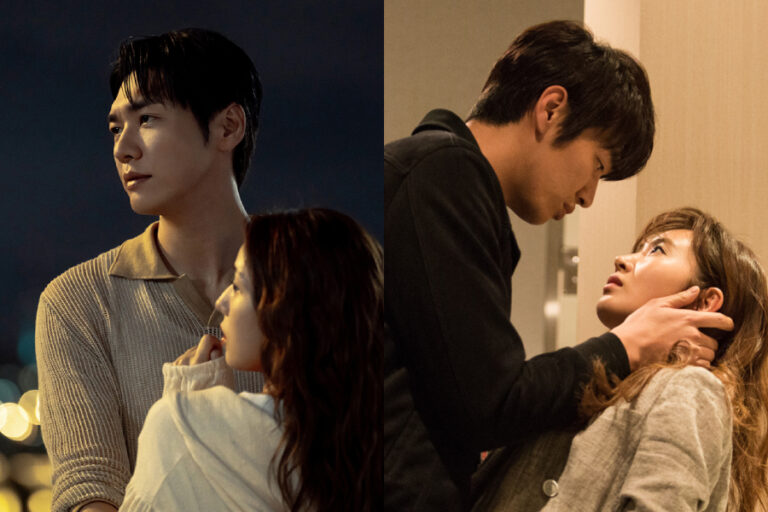
“The Impossible Heir” returned Kim Young Kwang to lighter territory. He plays Baek Ho Rang, a chaebol heir living with an artificial heart, opposite Chae Soo Bin’s Na Bo Bae, a drama writer who gained electrical powers after being struck by lightning. Unable to touch anyone without shocking them, Bo Bae discovers that Ho Rang is immune to her electrical discharge—in fact, her power can recharge his artificial heart. The two negotiate a contract that draws them closer. The role fits comfortably within Kim Young Kwang’s romantic-lead strengths, allowing him to play charming and physically attractive while exploring the lighter complications two people with unusual circumstances might face. His chemistry with Soo Bin creates genuine warmth, making this a natural fit for fans who prefer his work in comedic romance over darker material.
Source: Soompi
Frequently Asked Questions
What role brought Kim Young Kwang significant attention early in his career?
His role as Seo Beom Jo in "Pinocchio" opposite Lee Jong Suk and Park Shin Hye earned him considerable attention as a second male lead, where he portrayed a wealthy heir entering the journalism world alongside two leads pursuing the profession through personal motivation.
Which Kim Young Kwang drama features a medical crisis scenario?
"Dr. Romantic" places his character, surgeon Lee Hae Sung, at the center of a Seoul earthquake emergency where he prioritizes saving patients over hospital profits, working alongside Jung So Min and Ha Seok Jin.
What makes Kim Young Kwang's character unique in "The Impossible Heir"?
His character Baek Ho Rang is a chaebol heir with an artificial heart who discovers that Chae Soo Bin's character's electrical powers, gained from a lightning strike, have no effect on him and can actually recharge his heart.
