

Key takeaways
- Disney+ will premiere The Remarried Empress on November 4, an adaptation of a popular web novel starring Shin Min Ah, Lee Jong Suk, Ju Ji Hoon, and Lee Se Young.
- The story follows Navier, an empress who loses her position when her husband divorces her for a lower-born woman, then reclaims power by marrying a Western prince.
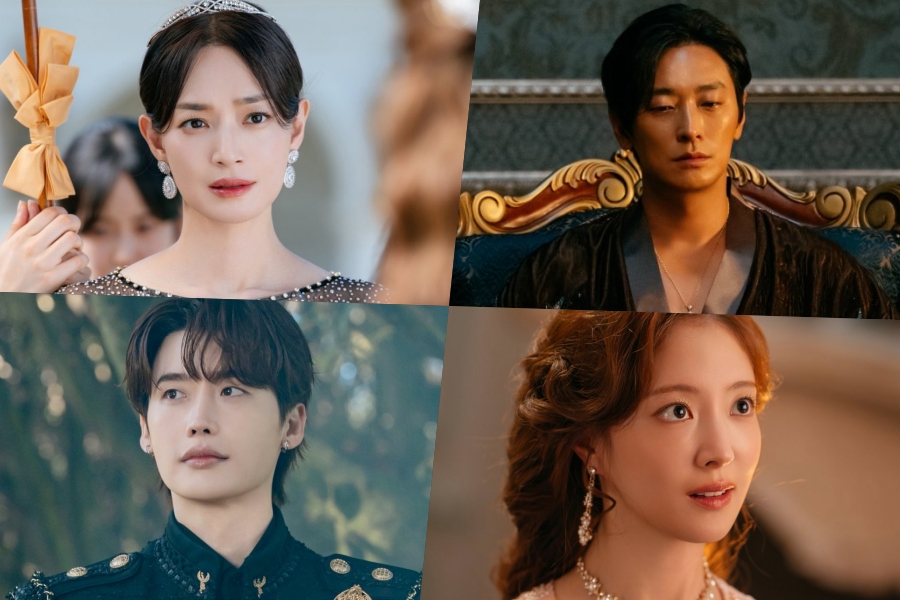
- Promotional stills reveal each character's emotional complexity: Navier's controlled facade cracking, Sovieshu's isolation despite his authority, Heinrey's enigmatic arrival, and Rashta's hidden ambition.
Disney+ will premiere “The Remarried Empress” on November 4. Based on a popular web novel, the series examines the personal and political upheaval that follows when an emperor abandons his empress for a lover of lower standing. Navier (Shin Min Ah), empress of the Eastern Empire, loses her husband and her position when Emperor Sovieshu (Ju Ji Hoon) chooses to divorce her in favor of Rashta (Lee Se Young), a woman who has risen from slavery to become the emperor’s favored companion. Rather than fade from influence, Navier pursues a path of strategic reclamation: she marries Heinrey (Lee Jong Suk), prince of the Western Empire. This union reshapes not only her personal circumstances but also the political balance between two realms.
The intertwined relationships of these four characters will generate the power struggles and personal conflicts that form the series’ central narrative. Promotional stills offer visual insight into their emotional positions and the tensions that bind them.
Navier: The Empress’s Crisis and Response
The Image of Perfection
Navier has cultivated an image of flawless imperial bearing. Promotional stills show her in lavish formal dress, her smile graceful and her composure refined. This is how the court and empire know her: a woman who has internalized and embodied the demands of her role. Her outward presentation speaks to years of discipline and protocol, a carefully constructed persona designed to project stability and authority.
The Moment of Fracture
Yet the stills contain an image of transformative significance. When Navier encounters Rashta, her expression hardens. The composure that has defined her public face becomes difficult to maintain. This still documents not simply emotional pain but a threshold moment—the point at which acceptance transforms into action. Navier’s decision to remarry represents her refusal to accept exile or diminishment. Instead, she moves toward agency, securing a new position through alliance with the Western Empire.
Sovieshu’s Power and Its Isolation
The emperor occupies the highest position in the Eastern Empire, yet the promotional stills suggest a loneliness that his authority cannot alleviate. One image shows Sovieshu conducting official business alongside Navier, his authority as a ruler on full display. Another captures him on horseback, hunting—a figure of power at ease in his dominion. Yet a third still shows him sitting alone in deep thought, disconnected from the empire he rules. The sequence implies that his decision to pursue Rashta and dissolve his marriage to Navier has set in motion consequences beyond his control. Even someone wielding absolute power may face conflicts that authority alone cannot resolve.
Heinrey and the Western Alliance
Heinrey has existed in the Eastern court’s collective imagination as a figure of rumor and hearsay. As prince of the Western Empire, he has been discussed but never present until now. The promotional stills introduce him as a man of assured confidence and understated charm, his relaxed demeanor and enigmatic expression suggesting depths yet unexplored. His marriage to Navier introduces an alliance with implications that extend far beyond the personal. His arrival at court raises questions about the transformations his presence will catalyze and the connection he will forge with Navier—questions that the stills deliberately leave unanswered.
Rashta: Ambition Beneath the Surface
The Ascent and Its Hidden Costs
Rashta represents an unusual social ascent. A former runaway slave, she now holds the emperor’s favor and a place within the imperial court. The promotional stills capture her radiating excitement about this transformed status and the prospect of a new life. Yet this visible enthusiasm masks a more calculated interior. Her gaze directed upward at Sovieshu carries an intensity of desire that belies her seemingly innocent appearance. The stills foreshadow that her ambition for power and status may ultimately bring turmoil to the imperial court that has elevated her.
Adaptation and Character Complexity
“The Remarried Empress” originates from source material that has already built a dedicated readership. The adaptation brings together performers tasked with conveying the psychological nuance required by the narrative. Shin Min Ah, Ju Ji Hoon, Lee Jong Suk, and Lee Se Young must embody characters whose motivations shift, whose loyalties are tested, and whose actions generate consequences that ripple across political boundaries. The promotional stills suggest a production that recognizes the necessity of balancing intimate emotional drama with the imperial stakes that frame it all.
The series premieres November 4 on Disney+.
Source: Soompi
Frequently Asked Questions
When does The Remarried Empress premiere?
The series premieres November 4 on Disney+.
Who stars in The Remarried Empress?
The cast includes Shin Min Ah as Navier, Lee Jong Suk as Heinrey, Ju Ji Hoon as Sovieshu, and Lee Se Young as Rashta.
What is the basic premise of The Remarried Empress?
Based on a popular web novel, the series follows Navier, empress of the Eastern Empire, who is divorced by her husband for a woman of lower social standing. She then marries Heinrey, prince of the Western Empire, reshaping the political dynamics between the two realms.
