
Key takeaways
- Jing Bo Ran's Luan Nian in The Early Spring balances sharp sarcasm with hidden vulnerability through a six-year secret romance that defines their turbulent relationship.
- From police officers to radio hosts to criminal psychologists, Jing Bo Ran's six dramas showcase acting range that moves far beyond romantic leading man archetypes.
- Regeneration displays his peak range, with Jing Bo Ran playing one character as a student, socialite, executive, and con artist depending on whose memory narrates.
- His roles consistently explore characters whose psychological complexity and internal struggles contradict what they present to the world.
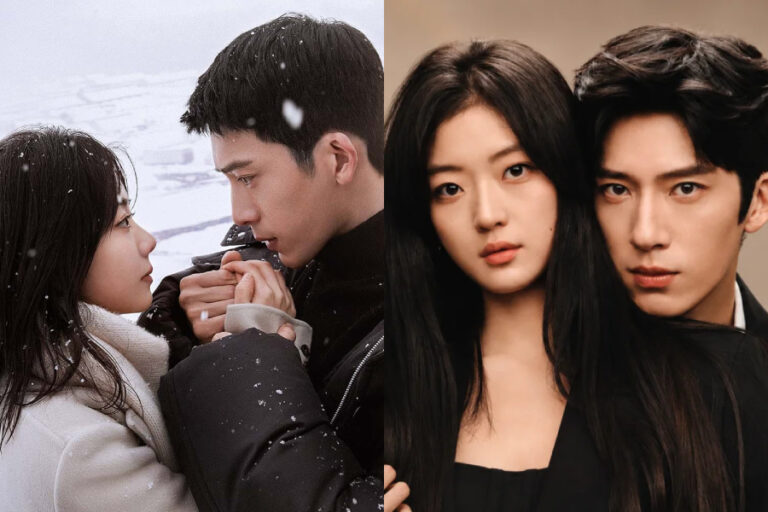
Jing Bo Ran has emerged as one of the most compelling leading men in contemporary Chinese dramas, a status largely cemented by his portrayal of Luan Nian in the office romance “The Early Spring.” Opposite Sun Qian’s Shang Zhi Tao, Jing Bo Ran embodies a sharp-tongued advertising executive whose initial dismissal of the protagonist conceals genuine attraction. Luan Nian serves as the lead at Lime, the advertising agency where Zhi Tao has recently arrived as a graduate with ambitions to establish herself professionally. His assessment of her as incompetent and unfit for the position sets their dynamic in motion, yet his aloofness gradually transforms into begrudging respect, then into passion.
What begins as a single night between them escalates into six years of secret involvement, creating the central tension of the narrative. Throughout those years, their opposing personalities, competing professional ambitions, and stark differences in social standing produce constant friction—the lack of honest communication between them fueling cycles of misunderstanding and emotional withdrawal. Despite recognizing the depth of their connection, neither allows themselves to fully acknowledge what the other truly means to them until their eventual separation forces a reckoning. Jing Bo Ran captures this contradiction with precise control, moving between moments of cutting sarcasm and glimpses of vulnerability beneath his carefully maintained exterior. The chemistry between him and Sun Qian drives viewer investment in their turbulent romance, amplified considerably by his stylish presentation throughout the series.
The Romantic Spectrum
His subsequent romantic roles reveal a performer moving beyond the sharp-tongued executive archetype, seeking characters whose emotional struggles manifest through different mechanisms.
The Caustic Executive
In “The Early Spring,” Luan Nian’s sharp edges—his sarcasm, his refusal to articulate genuine feeling, his reliance on cutting remarks—function as barriers against the vulnerability Shang Zhi Tao awakens in him. Jing Bo Ran portrays this character with such finesse that viewers cannot help but fall for him even as he continues hurting the person who cares for him most. His inability to express what he actually feels toward Zhi Tao, combined with his blunt and sarcastic tone that rattles her repeatedly, creates a dynamic in which the couple remains locked in a push-and-pull cycle. The turning point comes only after six years of secret involvement, when they finally separate and recognize the magnitude of what they allowed to slip away.
The Reserved Officer
“Road Home” partners Jing Bo Ran with actress Tan Song Yun in a narrative structured around rekindled romance between former high school sweethearts. His character, Lu Yan Chen, adopts an entirely different emotional posture—reserved and self-contained by nature, maintaining distance rather than deploying sarcasm. Yan Chen falls for Gui Xiao during their school years, but when he pursues a career with the police academy, the long distance between them becomes unsustainable. Gui Xiao chooses to end their relationship, a decision that devastates Yan Chen but which he ultimately respects. Rather than fighting for her, he accepts her choice and works to move forward, though he never fully releases the memory of their connection.
When their paths cross again years later, Gui Xiao discovers that the ordinary school boy has transformed into one of the police force’s most exceptional officers—someone his colleagues trust and respect for his unwavering commitment to protecting them. She attempts to rekindle their bond, yet Yan Chen maintains his distance, leaving the narrative’s central question unresolved: can these former sweethearts rebuild their connection, or has too much time and distance fundamentally altered their relationship beyond repair? Jing Bo Ran brings brooding intensity and quiet gentleness to this role—a man who has learned to protect others while carefully guarding his own heart, suggesting how past hurt can calcify emotional availability and make vulnerability feel impossible even with someone who once knew him completely.
Emotional Transparency
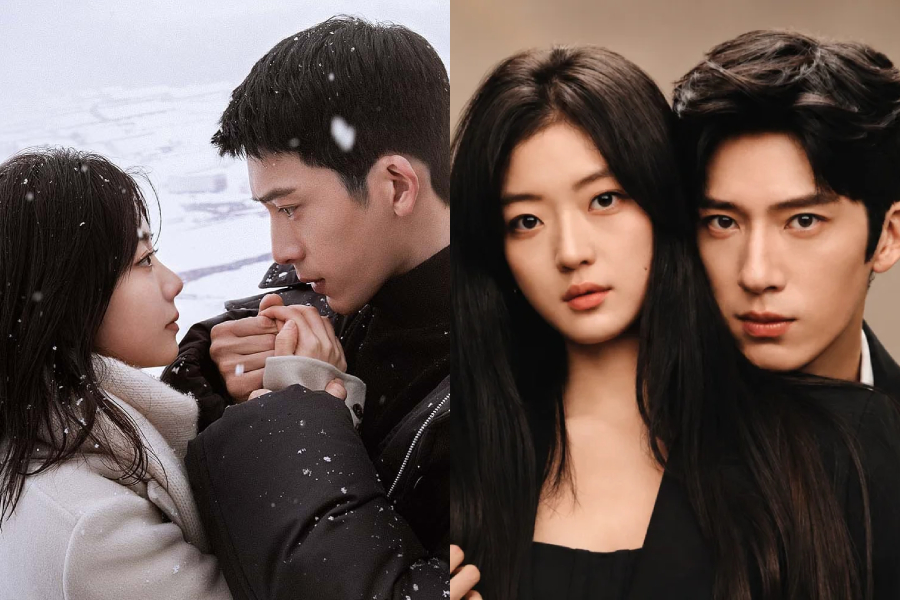
A marked departure emerges in Jing Bo Ran’s portrayal of Qian Kay Yi, a radio personality managing significant emotional baggage from his past. Unlike Luan Nian’s sarcasm or Yan Chen’s defensive distance, Kay Yi presents his damage through a lighter, more playful public demeanor. When Kay Yi encounters He Dun (Yang Zhi), a psychologist whose career has faltered following critical rejection, he offers her an opportunity to collaborate on a mental health program that transforms psychological cases into public discussions. As they work together, both confront dark secrets from their respective pasts, and what might have remained professional interaction becomes a genuine romantic connection.
Jing Bo Ran brings an easy chemistry and playful energy to Kay Yi, showcasing vulnerability not through emotional barrenness but through emotional honesty. This performance reveals his capacity to hold fractured identities—characters deeply wounded yet capable of genuine openness rather than self-protection.
Crime Thrillers and Psychological Complexity
Criminal Psychology and Investigation
“Sunsets Secrets Regrets” places Jing Bo Ran within a crime thriller framework, casting him as Jiang Han Sheng, a brilliant criminal psychology professor who reunites with childhood friends Zhou Jin (Elvira Cai), an investigator, and Qin Jun Jee (Jiang Cheng), an undercover operative, to examine a cold case that resurfaced five years after initial investigation. New clues prompt them to reexamine a crime syndicate from the inside, navigating webs of secrets, mutual suspicion, and intense psychological tension.
In this role, Jing Bo Ran abandons romantic idealism entirely for a stark, more cerebral performance rooted in shadow and calculation. He maintains an outwardly detached, cool academic demeanor while concealing fiercely protective emotional commitments to those within his circle. His sharp profiling skills and astute psychological insight allow him to outwit people within the syndicate, suggesting how intellectual mastery can coexist with carefully guarded feeling.
The Fragmented Identity
“Regeneration” demands Jing Bo Ran’s most psychologically demanding performance. His character, Fei Ke, has died under mysterious circumstances, which prompts a journalist (He Shan, played by Zhou Yi Ran) and five complete strangers to attend his memorial service. Those gathered quickly realize they each knew a completely different version of him, forcing them to piece together contradictory memories in pursuit of his actual identity. As they investigate, the narrative reveals a massive web of deception, hidden agendas, and financial fraud, with each participant harboring secrets of their own.
Rather than portraying a fixed character, Jing Bo Ran morphs seamlessly between a struggling student in one account, a wealthy socialite in another, a sharp corporate executive in a third, and a ruthless con artist in a fourth—each incarnation depending on whose perspective frames the story. For fans seeking to witness his absolute peak acting capability, this drama provides the perfect showcase, as he demonstrates his ability to play a deeply complex, fundamentally untrustworthy protagonist with chilling layers of psychological texture. He essentially becomes the gaps between different people’s contradictory understandings of a single individual.
Court Politics and Hidden Agendas
Jing Bo Ran’s role as Lan Jue positions him within a Ministry of Rites drama navigating court politics and royal corruption. Lan Jue occupies an official position involving diplomatic protocol, yet his carefully calculated life is actually driven by a personal mission: clearing his late father from a historical treason charge. His circumstances shift when he encounters Zhang Ping (Song Wei Long), an impoverished scholar possessing an uncanny, genius-level ability to read crime scenes. Despite their opposing social positions, conflicting ideals, and vastly different worldviews, they form an uneasy partnership to solve bizarre capital cases and expose royal corruption from within the system.
Jing Bo Ran brings an air of haughty poise, courtly grace, and deep inscrutability to the role, balancing an outwardly gentle, diplomatic facade with a heavily guarded internal struggle rooted in personal ambition. His intellectual “yin-and-yang” dynamic with Song Wei Long becomes the driving force of the narrative, with Jing Bo Ran’s inscrutability providing constant counterpoint to his partner’s direct honesty and unflinching observation.
The Consistent Choice of Depth
What unifies Jing Bo Ran’s filmography is not a particular character type but rather his consistent selection of roles demanding psychological depth and nuance. Whether portraying a sharp-tongued executive, a reserved officer, a sensitive radio personality, a calculating criminal psychologist, a fragmented con artist, or a diplomatic schemer, he brings the same commitment to exploring contradiction within his characters—the gap between what they show the world and what actually drives them internally. His range across these six dramas demonstrates that his appeal extends far beyond a single archetype, suggesting that viewers respond to his choice of complex, layered characters over simplified romantic leads.
Frequently Asked Questions
What drama brought Jing Bo Ran his current breakthrough moment?
The Early Spring, an office romance where Jing Bo Ran plays Luan Nian, a sharp-tongued boss at the Lime advertising agency opposite Sun Qian's Shang Zhi Tao. Their secret romance spans six years and becomes central to the drama's exploration of emotional complexity.
What range does Jing Bo Ran demonstrate across his six dramas?
His roles span romantic leads like Lu Yan Chen in Road Home and sensitive personalities like the radio host Kay Yi, to dark psychological characters such as criminal psychology professor Jiang Han Sheng and the unreliable protagonist Fei Ke in Regeneration.
Which drama showcases Jing Bo Ran's absolute peak acting range?
Regeneration, where Jing Bo Ran plays Fei Ke across multiple incarnations—as a struggling student, wealthy socialite, sharp corporate executive, and ruthless con artist—depending on whose perspective narrates the story.
