
Key takeaways
- Made in Korea 2 reunites Hyun Bin with new cast member Woo Do Hwan as his brother, creating internal family conflict nine years after Season 1.
- Promotional images show the two brothers facing off in an interrogation room, signaling a major rupture that transcends private family disputes.
- Hyun Bin's character constantly adapts his strategies for power, generating friction that intensifies when his brother pursues independent ambitions.
- The six-episode season premieres with two episodes on September 9, then releases two episodes every Wednesday.
The upcoming drama “Made in Korea 2” returns to themes of ambition, power, and moral compromise with a focus on family rupture alongside institutional corruption. The series expands its scope by introducing sibling rivalry as a central motor for conflict.
Understanding the Original Series
The first season of “Made in Korea” constructed its narrative around a fundamental opposition between two men driven by contrasting values. Baek Ki Tae, played by Hyun Bin, embodied ruthless ambition—the willingness to pursue wealth and influence through whatever means circumstances permitted. His antagonist, prosecutor Jang Geon Young (Jung Woo Sung), represented the alternative path: sacrifice and principle in service of justice. Their confrontation unfolded against the 1970s Korean landscape, a period rife with political instability and systemic corruption that rewarded opportunism and punished idealism.
Nine Years of Divergence
“Made in Korea 2” shifts forward nine years and alters the balance of power entirely. Baek Ki Tae has consolidated his position; rather than remaining a threat on the periphery, he now commands the heights of influence. Jang Geon Young, unchanged in his commitment to justice, has spent the intervening decade preparing a response. The introduction of Woo Do Hwan’s character—Baek Ki Hyun—reframes the conflict as something more intimate than prosecutor versus criminal. Baek Ki Hyun is Baek Ki Tae’s brother, but pursues power through a fundamentally different strategy. His ambitions spiral independently, creating what the series describes as an “irreversible rift” between the siblings. This fracture destabilizes both brothers simultaneously, opening space for Jang Geon Young to advance.
The Mechanics of Escalation
The central premise revolves around ambitions that amplify and contradict one another. Baek Ki Tae seeks to cement his dominance and extend his reach. Baek Ki Hyun climbs toward his own apex. Neither brother operates in isolation from the prosecutor’s counterattack. The compound pressure—internal family conflict combined with external legal/political threat—creates the conditions for catastrophic failure, though it remains unclear which figure, or which combination, will bear the cost.
The Interrogation: Visual Escalation
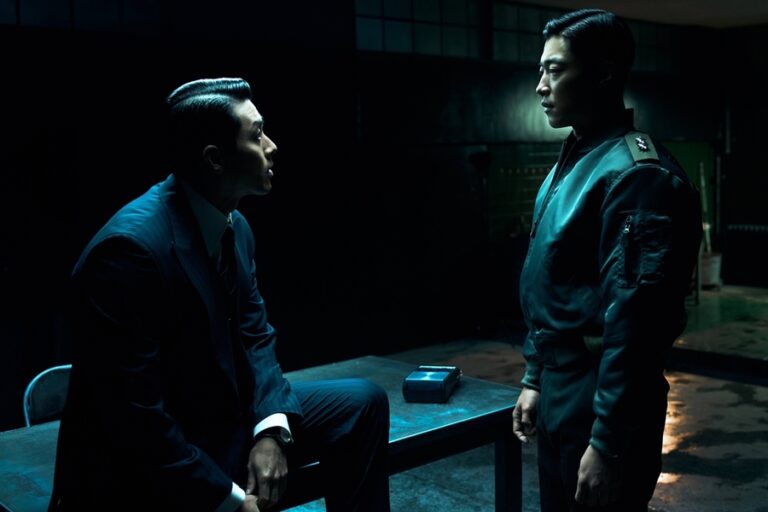
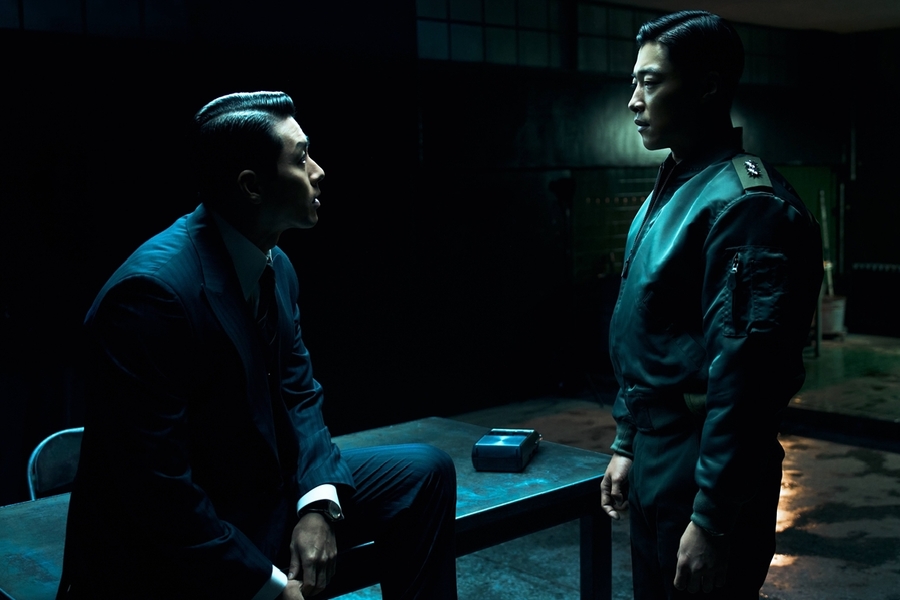
Promotional materials released ahead of the premiere depict the two brothers inside an interrogation room, facing each other across a table. The staging carries obvious dramatic weight. Baek Ki Hyun looks at Baek Ki Tae with unmistakable intensity. Baek Ki Tae, in the position of the accused, presents a mask of calm. The scene’s origins remain unrevealed; viewers cannot determine from the images alone what brought the brothers to this moment or what either stands to lose or gain in the exchange.
The Interrogation as Turning Point
The fact that such a scene exists at all signals a rupture beyond repair. Family disputes might be managed behind closed doors, but an interrogation room implies formal accusation—a crossing of a line that separates private conflict from public institutional engagement. Whether Woo Do Hwan’s character summons his brother before authorities, or whether both find themselves under official scrutiny, the image establishes that the season will move beyond strategic maneuvering into zones where consequences become irreversible.
Hyun Bin’s Character: Strategy as Weapon and Weakness
Hyun Bin described Baek Ki Tae as “a character who moves with several different strategies in mind. He constantly adapts his approach to stay on the path he wants, but this gradually creates friction.” This characterization reveals the paradox embedded in the character’s nature. Flexibility and tactical awareness enable survival and advancement; they also plant seeds of resentment among those affected by the constant recalibration. Someone adapts against you five times, you begin to recognize adaptation itself as aggression. Someone shifts strategy at your expense repeatedly, you learn to anticipate shifts. Friction accumulates into opposition, and opposition—when it comes from a sibling with equal resources and resolve—becomes existential.
Friction Between Brothers
This dynamic takes on heightened intensity when the other party is a brother. Family members cannot be dismissed or discarded as readily as ordinary rivals. Baek Ki Hyun’s pursuit of his own path to power, conducted alongside rather than subordinate to his older brother’s dominance, guarantees collision. When collision arrives, family protocols—loyalty, discretion, protection—may dissolve entirely in the face of competing self-interest.
Broadcasting Details and Viewing
“Made in Korea 2” premieres on September 9 with two episodes. The following weeks introduce two episodes each Wednesday, building to a six-episode total. The compressed format creates a viewing rhythm that matches the relentless escalation occurring within the narrative itself.
Frequently Asked Questions
What is the time gap between Made in Korea and Made in Korea 2?
Season 2 takes place nine years after the Season 1 finale, with Baek Ki Tae at the peak of power and prosecutor Jang Geon Young preparing a counterattack.
Who plays Baek Ki Hyun in Made in Korea 2?
Woo Do Hwan portrays Baek Ki Hyun, Baek Ki Tae's brother who pursues his own path to power.
When does Made in Korea 2 premiere?
The series premieres with Episodes 1 and 2 on September 9, followed by two new episodes every Wednesday for a total of six episodes.
