
Key takeaways
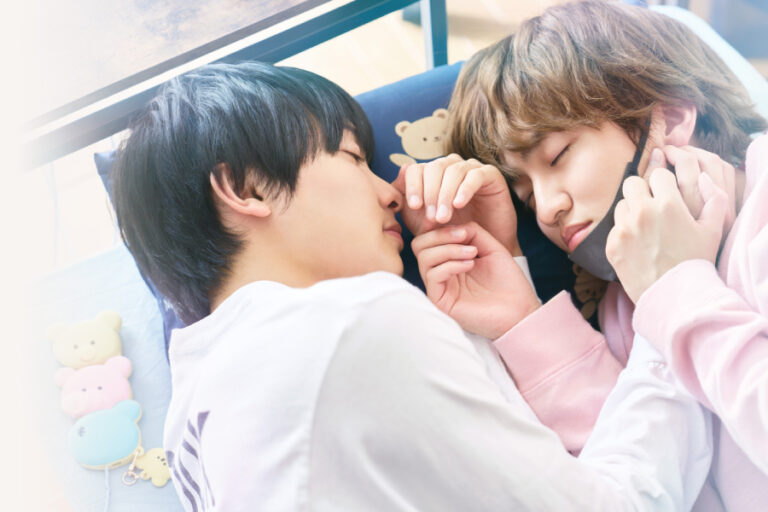
- Hold On, Harutora-Kun accelerates past typical BL drama pacing, reaching a kiss in episode one and confessions in episode two.
- The story centers on Sui's struggle between self-protection and Harutora's unfiltered desire for genuine connection and visibility.
- Unlike traditional slow-burn Japanese high school BLs, this drama prioritizes the emotional weight of existing openly rather than the gradual reveal of feelings.
A Student Behind Walls
Kishida Sui has perfected the art of invisibility. The high school sophomore spends nearly every moment wearing a mask—metaphorical and sometimes literal—to shield himself from the relentless cruelty of dorm life. His peers know he’s gay, and that knowledge has transformed his living space into something closer to a prison than a home. The communal bath, the group meals, the casual conversations that flow around him—all are off-limits when the cost of participation is the constant sting of ridicule. What others see is a bright, bubbly persona carefully constructed for survival. What exists behind closed doors is someone profoundly hurt, exhausted from the performance.
An Unexpected Roommate
Unfiltered Honesty
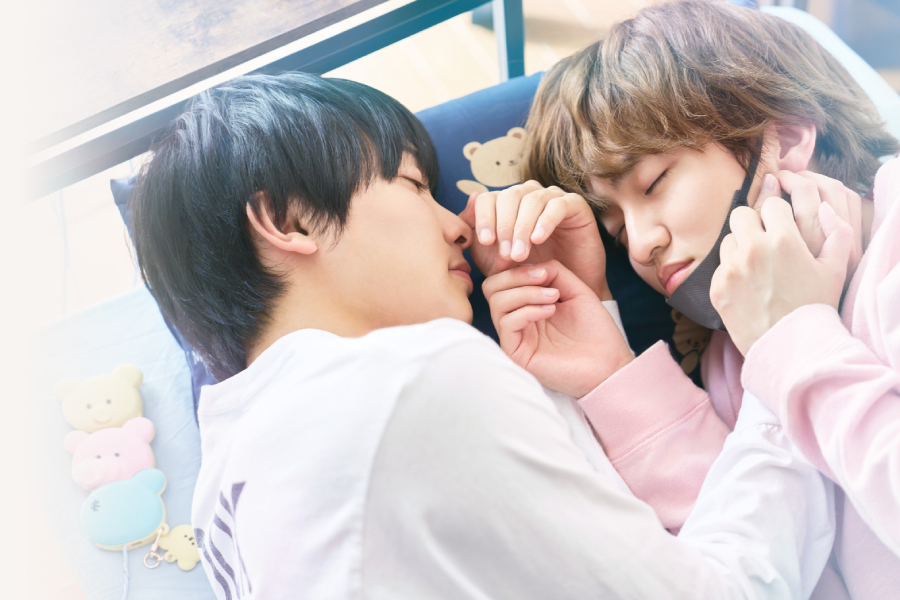
In Japanese BL drama Hold On, Harutora-Kun, this suffocating dynamic shifts the moment Kurobe Harutora arrives as Sui’s new roommate. Harutora is a freshman trying to make the basketball team, and his approach to the world seems almost reckless in its honesty. He shows up with genuine enthusiasm, unguarded feelings, and no apparent interest in hiding anything. Where Sui has learned to calculate every word and gesture, Harutora throws caution aside. In Sui’s own assessment, Harutora is “serious, kind, and a little bit quirky”—an evaluation that captures how foreign Harutora’s authenticity feels to someone who has spent months, perhaps years, performing a false self.
A Gift of Genuine Connection
Their introduction sets the tone immediately. Harutora presents a gift to his new roommate with nervousness that reads as endearing rather than calculated. He’s a blank slate compared to the predatory atmosphere Sui navigates daily. As Harutora suggests that Sui join him during basketball training—officially as motivation, though the underlying desire to spend more time together lingers just beneath the surface—Sui begins to lower his guard in ways he hasn’t with anyone else at school.
The Dorm’s Cruelty Intrudes
But safety in a dorm full of hostile witnesses is conditional. Two residents interrupt a moment where Sui and Harutora are standing close together. The incident itself is innocent, yet the opportunity for mockery is irresistible to them. They use it to ask Harutora point-blank whether he knows Sui is gay, attempting to taint Harutora’s perception before a real connection can deepen. Sui responds with the same defensive mechanism that has kept him isolated. He dismisses Harutora, claiming he’s not Sui’s type because Sui prefers “party people.” The strategy is aimed at saving Harutora from becoming collateral damage in Sui’s ongoing social ostracism. But the cost is apparent: Harutora walks away looking genuinely distressed. Sui braces for the inevitable—the departure, the abandonment, the repetition of a pattern that has already burned him before.
Episode One’s Escalation
A Party Built on Misunderstanding
What unfolds instead defies that expectation entirely. When Sui returns to the dorm, he discovers Harutora has organized a surprise party. The reasoning is both hilarious and deeply characteristic: Harutora took Sui’s statement about liking party people literally and decided to throw one. The gesture reveals something crucial about Harutora’s nature—his sincerity doesn’t operate on the same wavelength as irony or self-protection. He trusts what people tell him and acts on that trust with single-minded devotion.
An Unexpected Kiss
Then comes the kiss. It arrives at the end of the first episode without the usual slow-burn setup that defines the genre. Harutora leans in, and it’s unclear whether he fully understands what he’s doing or whether impulse has overtaken his conscious thought. For viewers accustomed to Japanese high school BLs where romantic progress unfolds across multiple episodes and countless moments of hesitation, this acceleration catches them off-guard. Harutora may not be certain what his own feelings are, but his body has already decided.
The Speed of Episode Two
Episode two escalates this momentum further. Confessions come quickly, their rhythm suggesting that both characters have been wrestling with these feelings since the moment they met. Harutora’s lack of subtlety works in his favor—he can’t hide what he feels, and his emotional honesty drags Sui toward his own reckoning. This pacing is striking for the genre, where typically episodes and episodes of back-and-forth precede any real progress between leads. Here, the drama skips that entire ritual.
The Real Tension: Incompatible Strategies
Different Languages of Love
The central tension now crystallizes around a fundamental incompatibility in their coping strategies. Harutora is bursting with the desire to be closer to Sui, to make the relationship tangible and public. Sui, by contrast, has spent months learning that visibility as a gay person in this environment means pain. He needs progression measured in inches; Harutora appears wired to move in strides. Sui requires reassurance that the world has changed enough to make honesty safe. Harutora operates from the assumption that sincerity and love should be enough.
What gives Hold On, Harutora-Kun its particular power is how it frames this collision not as a plot obstacle but as the core emotional truth. Sui’s self-protective instincts are born from real damage. The dorm residents have shown no capacity for growth or acceptance. Harutora is currently the only person treating Sui with kindness, yet that kindness comes attached to needs and desires of its own. Sui must learn not just to open up, but to trust that opening up won’t destroy him or the person he’s opening up to. And Harutora must learn that love sometimes means restraint, patience, holding back the impulse to rush forward.
A New Approach to BL Pacing
The premise of a masked student and an unfiltered romantic becoming roommates is effective BL territory. But this drama’s willingness to move at an unconventional pace—delivering romantic escalation in two episodes rather than stretching it across a season—suggests confidence in its own material. It’s betting that the audience is invested not in the slow revelation of feelings, but in how these two figures navigate existing with those feelings in an unchanged, often cruel world. For a genre that has a reputation for dragging out its milestones, Hold On, Harutora-Kun offers something refreshingly direct: the romance isn’t the mystery to be solved, but the crucible in which both characters must decide who they’re willing to become.
Frequently Asked Questions
What is Hold On, Harutora-Kun about?
A masked high school student named Kishida Sui becomes roommates with Kurobe Harutora, a sincere freshman. Their contrasting approaches to life and authenticity trigger a rapid romantic connection that forces Sui to confront his self-protection and Harutora to consider restraint.
Why does Harutora throw a surprise party in episode one?
Sui claims he prefers "party people" to deflect when dorm mates discover them standing close together, attempting to protect himself from social fallout. Harutora takes the statement literally and organizes a party.
How does Hold On, Harutora-Kun differ from other Japanese BL dramas?
Most Japanese high school BL dramas extend romantic progress across numerous episodes with hesitation and back-and-forth between characters. Hold On, Harutora-Kun condenses these milestones into the first two episodes, with a kiss in episode one and confessions in episode two.
