
Key takeaways
- Song Kang and Lee Jun Young's characters begin as perfectly synchronized piano partners but grow distant due to external pressures and constant comparisons between them.
- Kang Pio struggles with his mother's unyielding demand for first place, while Choi Jeong Yo faces the complications of unexpected acclaim as an emerging piano talent.
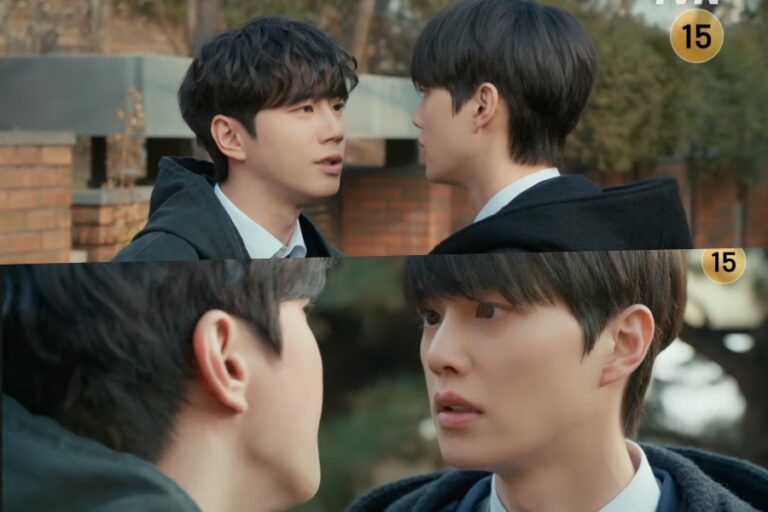
- The teaser captures the relationship's breaking point when Choi Jeong Yo confronts Kang Pio with "Are you deliberately distancing yourself from me?", receiving only silence in response.
tvN’s upcoming drama “Four Hands, Two Sonatas” centers on the complex and ultimately destructive relationship between two talented young pianists whose artistic partnership crumbles under the relentless pressure of external expectations and constant comparison. The recently unveiled teaser offers a compelling visual narrative of how professional ambition, parental demands, and social comparison can transform a once-unbreakable bond between friends into bitter rivalry, with the dramatic transformation occurring across a span that encompasses their journey from adolescence into early professional adulthood.
The series title draws its meaning directly from musical terminology, with “four hands” referring to a specialized pianistic technique in which two performers play simultaneously on a single instrument. This foundational concept becomes more than merely a musical description; it serves as a metaphor for the kind of perfect synchronization and interdependence that should ideally characterize the relationship between the drama’s two protagonists. The narrative itself chronicles the parallel emotional and professional evolution of two youths whose lives become intertwined through their enrollment at an arts high school. The story documents their trajectory from promising adolescent students through their development into accomplished professional pianists, capturing not only their shared artistic experiences and mutual growth but also the romantic entanglements, competitive tensions, and ultimately the personal transformations that accompany their rise through the ranks of the musical world.
The Visual Language of Partnership and Division
The Opening Moment of Perfect Synchronization
The teaser’s opening sequence proves particularly revealing in its depiction of what the protagonists’ relationship once represented. Kang Pio, portrayed by Song Kang, and Choi Jeong Yo, played by Lee Jun Young, are shown performing a four-hands composition together. The visual presentation captures not merely technical execution but the profound ease of their collaboration. Their casual coordination of roles—with one naturally assuming responsibility for operating the pedals while the other manages navigation of the sheet music—speaks to a level of comfort and mutual understanding that transcends typical friendship or professional collaboration.
The Chemistry That Cannot Last
This particular moment in the teaser functions as a baseline against which all subsequent developments must be measured. The interplay between Song Kang’s and Lee Jun Young’s characters reveals the kind of intuitive communication that emerges only after extensive shared experience and genuine respect. They function not as separate individuals attempting to coordinate their separate efforts, but rather as unified components of a single artistic entity. The seamlessness visible in their performance suggests hours of rehearsal, countless conversations about musical interpretation, and a deep emotional trust that allows them to be vulnerable and adaptive with one another. The teaser emphasizes the effortless nature of their musical partnership by allowing the audience to witness the natural division of labor and the absence of tension or negotiation.
The Machinery of Comparison
The Maternal Expectations Framework
Song Kang’s character, Kang Pio, operates within a family structure that provides no emotional buffer from the pressures of competitive musical performance. His mother maintains exacting standards that reject anything less than first place. These are not reasonable expectations calibrated to a child’s actual capabilities or developmental stage; rather, they represent an absolutist position that permits no room for growth, experimentation, or anything resembling a second-place finish. The maternal rejection of any outcome other than complete victory transforms the act of musical performance from an expression of artistic passion into a source of persistent anxiety and the constant threat of parental disapproval.
The Opposite Burden: Unsolicited Acclaim
Lee Jun Young’s character, Choi Jeong Yo, experiences an entirely different but equally destabilizing form of external pressure. Rather than struggling against parental rejection and relentless criticism, he finds himself thrust into a position of emerging prominence. His talents as a pianist generate notice and admiration from those around him, positioning him as a rising star within the piano world. This attention was not necessarily sought; it emerges simply from his undeniable musical abilities and the particular moment at which he entered the professional consciousness of those who follow such talent. Yet this unsolicited spotlight creates its own complications.

The Deterioration of Trust
How Constant Comparison Poisons Partnership
The external comparisons begin their work in a manner both subtle and insidious. The constant placing of these two artists in relation to one another—whether directly or implicitly through others’ observations and judgments—introduces a competitive framework into a relationship that was originally collaborative. What once felt like two artists working in service of a shared artistic goal gradually transforms into a situation where one artist’s success feels like another’s relative failure. The comparisons create a zero-sum mentality where the well-being of one pianist becomes inversely related to the well-being of the other. Song Kang’s character, already burdened by his mother’s refusal to accept anything less than first place, begins to view his collaboration with Lee Jun Young’s character through a new and ultimately destructive lens.
The Moment of Rupture
The teaser captures the painful climax of this deteriorating dynamic. Lee Jun Young’s character, having sensed the shift in their relationship and the growing emotional distance, confronts Song Kang’s character directly with a question that carries the weight of accumulated hurt and confusion: “Are you deliberately distancing yourself from me?” The question itself represents an attempt to engage, to seek clarification, and to preserve whatever remains of their connection. Song Kang’s character responds only with silence and an empty stare. This lack of verbal response functions as its own devastating answer. The exhaustion visible in his expression suggests that he has been worn down by competing demands—the weight of maternal expectation, the pressure of comparison, and perhaps his own internalized belief that friendship and competition cannot coexist.
From Partners to Rivals
The arc traced by the teaser documents the complete inversion of the initial relationship dynamic. The two pianists who began the teaser as partners have concluded it as individuals barely capable of honest communication. The four-hands technique that once symbolized perfect coordination now represents an impossible aspiration, something that belonged only to a moment before external pressures became too great to overcome. The partnership that provided mutual support transforms into a source of anxiety and resentment, a relationship so damaged that reconciliation seems unlikely.
“Four Hands, Two Sonatas” premieres on tvN on August 29 at 9:10 p.m. KST, promising to explore in full detail how these two talented musicians navigate the transition from partnership to rivalry, and whether any path toward reconciliation exists once the damage has been done.
Frequently Asked Questions
When does "Four Hands, Two Sonatas" premiere?
The drama premieres on tvN on August 29 at 9:10 p.m. KST.
What does the title "Four Hands, Two Sonatas" refer to?
"Four hands" is a piano technique where two performers play a single instrument together, serving as a metaphor for the perfect synchronization between the two main characters' partnership.
What are the main struggles facing each character?
Kang Pio, played by Song Kang, faces harsh criticism from his mother who refuses to accept anything less than first place, while Choi Jeong Yo, played by Lee Jun Young, becomes the center of external attention as an emerging piano talent.
