
Key takeaways
- Sword & Silence is a historical epic about Silla's unification of the Three Kingdoms against Tang dynasty opposition, premiering November 14 on KBS 2TV.
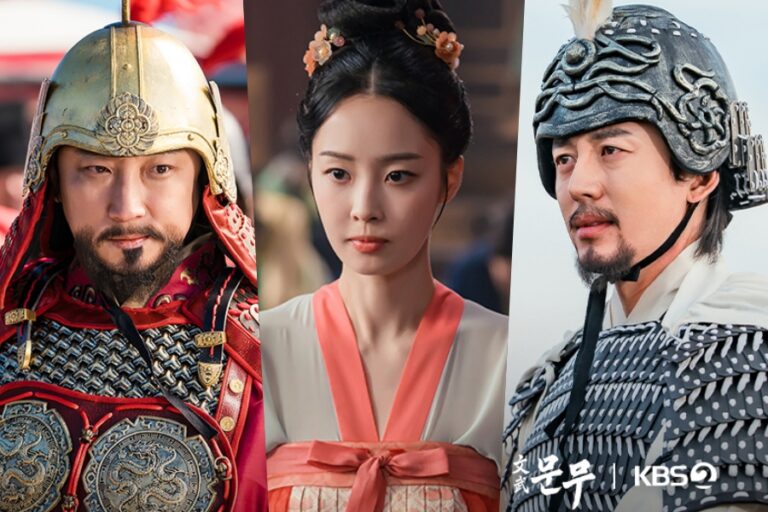
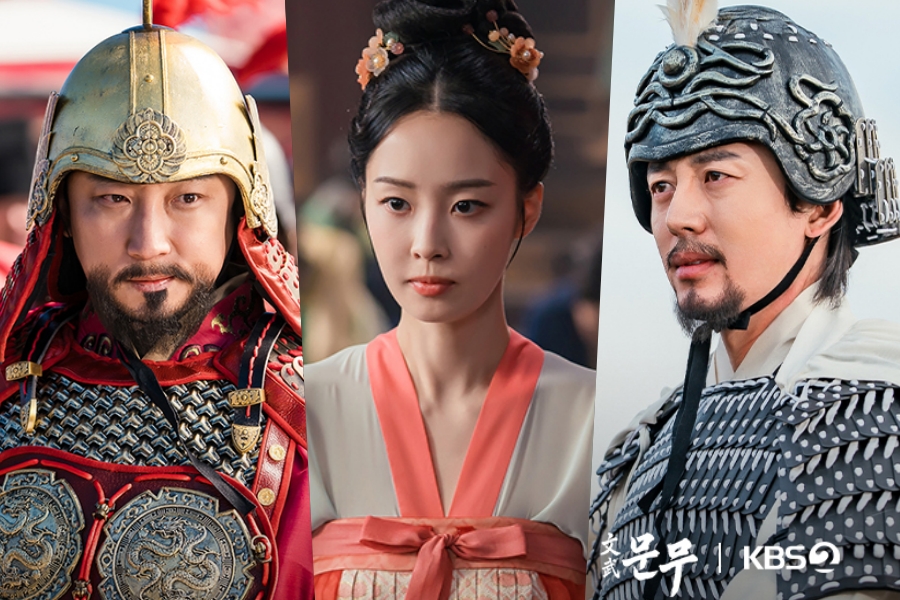
- Yang Hyun Min plays Tang emperor Li Shimin, whose conquest of Goguryeo triggers the cascade of conflicts that defines the drama.
- Choi Ye Bin portrays Wu Zetian, a concubine who rises to empress and consolidates power by systematically eliminating her political opponents.
- The five Tang characters' competing ambitions—conquest, succession, court intrigue, and military loyalty—intersect with Silla's own unification agenda.
KBS 2TV’s upcoming historical epic “Sword & Silence,” directed by Kim Yeong Jo of “Hwarang: The Poet Warrior Youth,” has announced its cast of Tang dynasty figures who will occupy central roles in the unfolding drama. The narrative spans a pivotal period in Korean and East Asian history, following how the kingdom of Silla managed to unify the Three Kingdoms by overcoming the far greater military and political power of both Goguryeo and Baekje, while simultaneously contending with the expansionist ambitions of China’s Tang dynasty. The five characters now confirmed represent the competing forces—imperial ambition, court intrigue, military might, and personal desire for power—that will intersect and ultimately shape not only the fate of the Three Kingdoms but the entire geopolitical landscape of the peninsula.
The Emperor at the Center
Li Shimin’s Conquest and Legacy
Yang Hyun Min portrays Li Shimin, the Tang dynasty’s reigning emperor and one of the drama’s most pivotal figures. The character is defined by a ruthless pursuit of power—historically, Li Shimin secured the throne by eliminating his own brothers, an act that sets the tone for the moral complexity of his reign. Once in power, he demonstrates a pragmatic willingness to recruit talented individuals regardless of their former allegiances, recognizing that exceptional ability transcends factional loyalty. His defining ambition throughout the drama centers on military conquest of Goguryeo, the powerful northern kingdom that has long resisted Tang expansion. To achieve this objective, Li Shimin initiates a massive military campaign of unprecedented scale. However, this campaign encounters stronger resistance than anticipated from Goguryeo’s fierce military capabilities, creating a crisis that triggers the cascade of events through which the rest of the drama unfolds.
The Architecture of Power
The Adapter in the Court
Park Myung Hoon takes on the role of Xu Jingzong, a close confidant and advisor to Li Shimin whose influence extends across the shifting political landscape of the Tang court. Xu Jingzong’s defining characteristic is political shrewdness—he possesses the rare ability to navigate and adapt to sudden shifts in power without losing influence or his life, a skill essential for survival in the treacherous environment of imperial politics. During Li Shimin’s reign, Xu Jingzong is deeply involved in both the Goguryeo military campaign and the sensitive matter of Crown Prince Li Zhi’s regency and succession planning. Yet after Li Shimin’s death marks a turning point in the dynasty, Xu Jingzong’s concealed personal ambitions come to light. He actively enters the internal power struggle consuming the Tang court, revealing a second dimension of his character that had remained carefully hidden behind his role as a faithful servant.
The Concubine Who Rewrote History
Choi Ye Bin transforms into Wu Zetian, a historical figure whose trajectory from concubine to supreme ruler forms one of the drama’s central narratives. Wu Zetian first appears as one of Li Shimin’s concubines, distinguished by her exceptional political intelligence and fierce personal ambition. Following Li Shimin’s death, the dynamics of the court shift in her favor. She successfully captures the affection and trust of the new emperor, Li Zhi, and gradually rises through the palace hierarchy to achieve the position of empress. Her ascent is not passive but actively engineered—she strategically removes senior court officials and other rivals who oppose her political agenda, methodically consolidating power with each elimination until her influence becomes absolute within the dynasty.
The Transitional Emperor
Park Kang Sub plays Li Zhi, who inherits the throne following his father Li Shimin. In sharp contrast to his predecessor, Li Zhi is characterized by deep personal devotion to Wu Zetian, whom he loves and politically supports. As Li Zhi’s physical health deteriorates over time, he increasingly relies on Wu Zetian to manage state affairs, effectively transferring governmental authority from the throne to his empress. This gradual shift reorders the power structure of the entire Tang dynasty, with consequences that ripple outward toward the peninsula’s other kingdoms.
The General’s Path
Lee Ji Hoon assumes the role of Xue Rengui, a Tang military commander whose personal loyalty and battlefield prowess become increasingly central to the political struggles within the court. Xue Rengui first earns Li Shimin’s confidence by demonstrating exceptional courage during the Goguryeo military campaign—specifically by rescuing the emperor from immediate danger during a critical battle. His military success continues across multiple campaigns and theaters of conflict, gradually earning him the personal trust and confidence of both Li Zhi and Wu Zetian. By the time the drama’s conflicts come to a head, Xue Rengui has become one of the Tang dynasty’s leading generals, positioning him as a figure whose loyalty is contested by multiple power centers.
The Collision of Ambitions
These five characters do not exist in isolation but instead orbit one another in an intricate dance of competing interests and overlapping ambitions. Li Shimin’s determination to conquer Goguryeo provides the initial spark that sets the entire drama in motion. However, his ambitions extend beyond simple military victory and become intertwined with the internal succession of power within his own court. Xu Jingzong’s carefully concealed personal aspirations put him in opposition to Wu Zetian’s rising influence and her own designs for absolute power. Xue Rengui’s military abilities become a resource fought over by different factions, each attempting to secure his loyalty. These competing interests and power struggles within the Tang dynasty’s upper echelons eventually create tensions with Silla, the kingdom actively pursuing its own unification agenda, making the internal conflicts of the Tang court inseparable from the larger historical narrative of the peninsula’s political reorganization.
Premiere Details
“Sword & Silence” will premiere on KBS 2TV on November 14 at 9:20 p.m. KST. The drama’s historical scope encompasses several decades of Tang dynasty history, military operations spanning the entire peninsula, and the profound transformations of power and authority within one of East Asia’s greatest imperial dynasties, set against the backdrop of Silla’s remarkable ascent to dominance over the peninsula.
Source: Soompi
Frequently Asked Questions
When does Sword & Silence premiere?
The drama premieres on November 14 at 9:20 p.m. KST on KBS 2TV.
Who is the director of Sword & Silence?
The drama is directed by Kim Yeong Jo, who previously directed Hwarang: The Poet Warrior Youth.
What is the historical setting of Sword & Silence?
The drama follows Silla's unification of the Three Kingdoms against opposition from Goguryeo, Baekje, and China's Tang dynasty.
