
Key takeaways
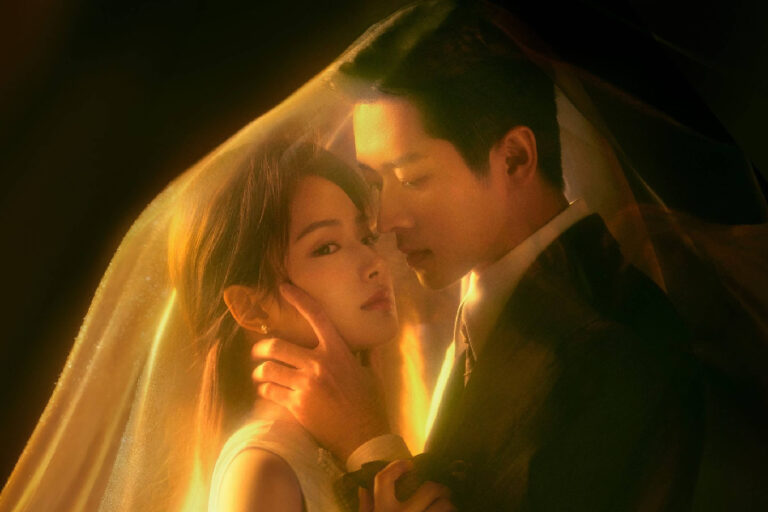
- The Lament of Autumn centers on a psychologically dysfunctional relationship where power and obsession replace traditional romance between a privileged military officer and an idealistic student.
- Ryan Cheng portrays Yu Chang Xuan as a contradiction: charming and controlled on the surface, but driven by cruel obsession beneath, while his target Ye Ping Jun refuses capitulation despite entanglement in his world.
- Set in 1920s Republican China after the Qing dynasty's collapse, the drama captures a period of political volatility and cultural ferment through visual storytelling in costume and fashion.
- The relationship between the leads defies moral absolutes, creating an uneasy symbiosis where neither character is purely right or wrong, according to Soompi's analysis.
The story unfolds against Republican-era China in the early 1920s, a period of intense volatility. The Qing dynasty had collapsed, and the young Republic found itself fractured, carved into territories controlled by ruthless warlords who consolidated power through convenience alliances rather than shared ideology. Military commanders like the Yu family wielded authority over cities like Nanhuai, where business and military interests intertwined so tightly that personal relationships could become strategic assets. Yet even as this political instability defined the era, Chinese culture was undergoing a profound shift. The New Culture Movement challenged traditional values and promoted science and reason, offering a philosophical counterpoint to the lawlessness that surrounded it.
The Players and the Catalyst
The Fifth Son
Yu Chang Xuan is the fifth son of this influential military family. Intelligent, discerning, and physically striking, he is considered desirable to many around him. His reputation as a playboy obscures a sharper truth: Chang Xuan is someone who decides what he wants and takes it, indifferent to social conventions that might slow him down.
The Woman Who Will Not Bend
This changes when he encounters Ye Ping Jun, a brilliant student from an ordinary background who works multiple jobs to support her mother’s medical care. Where Chang Xuan embodies privilege and impulse, Ping Jun represents principle. She believes in equality regardless of social standing and refuses to be impressed by his wealth or status.
The Transformation
An assassination attempt against Chang Xuan pulls her directly into his orbit and transforms their trajectory. The incident becomes the catalyst for an obsession that drives the narrative forward. What follows is not a straightforward romance but a psychological struggle where calculation, desire, and power intersect in a relationship so consuming that neither character can easily escape it.
A Complicated Inheritance
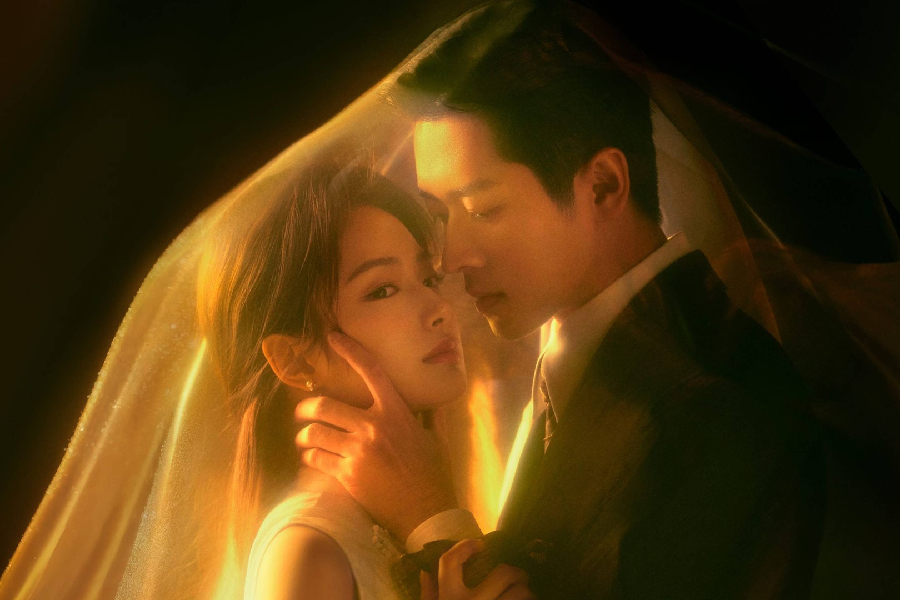
Chang Xuan’s position within his family is fraught. His father, General Yu Zhong Xuan, regards his fifth son as a troublemaker compared to his eldest, Yu Ming Xuan, who died in military service. The loss of the elder son has calcified the father’s judgment: Chang Xuan survived the same battle that killed his brother, a fact that haunts him across the years. The general dismisses his fifth son as a man without depth, someone whose interest in women overshadows any potential for serious military leadership.
Yet Chang Xuan is acutely aware of the corruption embedded in military and business hierarchies, the way generals and wealthy merchants depend on each other to maintain systems of control. He navigates this ecosystem strategically. When he prevents his father from being assassinated, he leverages the moment into a negotiation: in exchange for saving the man’s life, Chang Xuan demands authority over Nine Corp and recognition as leader of the family’s military forces. The transaction is clean and calculated.
In his personal dealings, he applies the same logic. He maintains an opera singer as a dependent at the Xiangxi Hotel, which he owns. He strings along Tao Zi Yi, a wealthy and imperious woman, for reasons unrelated to affection. Her father controls banking resources that Chang Xuan needs. To Chang Xuan, ends justify means. He operates without moral constraints, bending circumstances to his will.
When Defiance Becomes Fascination
The Cracks in His Certainty
The encounter with Ping Jun fractures his certainty. He initially resents her while simultaneously drawn to her. When the assassination investigation requires her cooperation, he coerces her into signing a contract, then manipulates the terms to secure her employment at his hotel. The maneuver is intended to place her under his control, but Ping Jun resists at every turn. Each refusal intensifies his fascination.
The Cruel Savior
According to Soompi, he becomes cruel in his attachment to her, pushing her toward her limits while simultaneously protecting her from threats that emerge around her. When she apologizes for calling him a cold-blooded tyrant during a refugee crisis he had organized aid for, his response cuts through his usual arrogance: “Don’t try making me a saint. I won’t be able to take it.” The line exposes a fracture in his armor, a moment where the humanity he keeps buried surfaces briefly.
Ryan Cheng’s Articulation
Ryan Cheng articulates these contradictions with considerable screen presence. Soompi notes that his portrayal combines contained intensity with understated magnetism, creating a character who shifts between calculated detachment and genuine, if deeply twisted, emotion. He plays a man whose charm masks something far more complex underneath.
Ping Jun’s Impossible Position
Ping Jun comes from circumstances entirely foreign to Chang Xuan’s world. She works multiple odd jobs to afford her mother’s medical care, a fact that defines her resilience and her values. Unlike the women Chang Xuan has known, she holds convictions that transcend personal advantage. She advocates for equality across social lines, an ideology shaped partly by the cultural ferment of the era and partly by simple moral clarity.
Yet she becomes entangled in Chang Xuan’s world in ways she neither fully understands nor can easily escape. Her mother harbors secrets specifically designed to protect her daughter. A man she trusts, Xue Ting, returns from four years in Japan with an agenda he keeps hidden. And Chang Xuan orchestrates situations that keep her perpetually within his orbit: arranging her adoption into the Bo Ren family, ensuring her employment at the hotel where he operates, coercing her into attending his birthday dinner as his date with the condition of terminating her suffocating work contract, and making public declarations that position her as belonging to him.
Ping Jun refuses to capitulate to his dominance. She expresses her hatred openly and mocks him whenever opportunity arises. He encourages this defiance rather than punishing it, creating a dynamic that confuses everyone around them: there is antagonism alongside an undertone of fondness that neither character can quite name or control.
A Relationship Without Clear Morality
According to Soompi, this is not the sizzling forbidden romance that viewers might initially expect from the premise. Instead, the drama subverts those tropes entirely. The relationship operates on psychology, need, and transaction rather than on passion alone. Chang Xuan derives a kind of sadistic satisfaction from observing and tormenting Ping Jun, showing her no mercy as she faces obstacles both of his creation and those initiated by rivals like Tao Zi Yi. Yet beneath the torment exists a grudging respect for her refusal to break.
He reveals to his closest friends that he wants to witness how far she can endure. Over time, he recognizes that his desire for her has consumed him far more profoundly than he anticipated. Aware that her social position makes her an unsuitable match in the rigid hierarchy of his world, he invents pretexts to keep her close: positioning her as an adopted sister, ensuring her employment under his ownership, recruiting her fiancé Xue Ting to a position at Nine Corp specifically to maintain surveillance and proximity.
The line between lover and tormentor remains permanently blurred. The attachment he exhibits is coercive, possessive, and utterly without the healthy reciprocity that relationships typically require. Yet Ping Jun, for all her idealism and strength, finds herself bound to him through a paradoxical dependence. Neither character occupies purely moral ground; neither is simply right or wrong. The uneasy symbiosis between them generates the tension that propels the narrative forward.
Fashion as Historical Testimony
The setting contributes significantly to the drama’s appeal. The early 1920s were a moment of extraordinary cultural ferment in China, and the production captures that visually through costume. Each garment becomes a language through which class, ideology, and character preference speak without words.
Ping Jun’s cheongsams, though modest in cut, carry the spirit of modern womanhood as a quiet assertion of gender equality and contemporary thinking. The cheongsam itself had emerged in Shanghai during this decade as a symbol of evolving attitudes toward women, transitioning from its initial representation of gender equality to incorporating Western flapper influences by decade’s end. By contrast, women of the upper class wear satins and chiffons adorned with glittering jewels and topped with sleek short hairstyles that reference Western fashion. Men appear in Mandarin jackets, Zhongshan tunic suits, and military uniforms with rigid stand-up collars and decorative epaulettes that communicate rank and affiliation. Each costume signals where a character stands within the social and political landscape, making fashion itself a form of narrative exposition. The result is a visual world that is colorful and dynamic, one that demonstrates how even in turbulent times, the era had a distinctive aesthetic identity.
Source: Soompi
Frequently Asked Questions
Is "The Lament of Autumn" a traditional romance drama?
No, according to Soompi, the drama defies conventional romance tropes. Instead of a sizzling love story, it depicts a psychologically dysfunctional relationship driven by power, obsession, and control rather than genuine affection.
What is the setting of "The Lament of Autumn"?
The drama is set in Republican-era China in the early 1920s, a volatile period after the Qing dynasty collapsed when ruthless warlords controlled different territories and military families like the Yu clan wielded significant power over cities like Nanhuai.
Who plays the main characters?
Ryan Cheng plays Yu Chang Xuan, the fifth son of an influential military family, and Xu Ruo Han plays Ye Ping Jun, a brilliant student from an ordinary background whose lives intersect after an assassination attempt.
