
Key takeaways
- Kim Kang Woo plays Kim Chun Chu, a political strategist who ascends from social outsider to become Silla's 29th king in 'The Great King Munmu.'
- The drama, directed by Kim Yeong Jo, traces Silla's unification of the Three Kingdoms and Kim Chun Chu's evolution from defending survival to pursuing continental ambition.
- Operating by the principle 'Survival in the present is victory in the future,' Kim Chun Chu uses diplomatic skill and strategic judgment to overcome opposition from Silla's sacred-bone aristocracy.
The upcoming drama “The Great King Munmu” has introduced Kim Kang Woo in the central role of Kim Chun Chu, a figure whose political ascent fundamentally altered the course of ancient Korean history. Director Kim Yeong Jo, known for his work on the historical series “Hwarang: The Poet Warrior Youth,” guides this examination of power, survival, and ambition in an era of kingdoms colliding.
The Kingdom on the Brink
The narrative foundation rests on a historical reality: the kingdom of Silla, initially the smallest and apparently weakest of Korea’s three major powers, ultimately achieved something its rivals could not. Through political strategy, military strength, and calculated alliances, Silla overcame both Goguryeo and Baekje—powerful kingdoms that had dominated the peninsula for centuries—while simultaneously contending with the military threat posed by the Tang dynasty of China. This unification of the Three Kingdoms, accomplished through a combination of direct conflict and diplomatic maneuvering, serves as the historical backdrop for the drama’s examination of how individual ambition intertwines with national destiny.
A Family Burden
Kim Chun Chu’s position at the start of the narrative is marked by contradiction. As the grandson of King Jinji, he carries royal blood, yet his grandfather’s deposition cast a shadow over his legitimacy and standing. Silla’s rigid social hierarchy further complicated matters: he belonged to the true-bone class, a rank that placed him beneath the sacred-bone aristocracy that wielded control over the kingdom’s political institutions and exerted influence over the throne itself. This social arrangement meant that despite his royal lineage, he faced consistent and determined opposition from the entrenched elite.
The Crisis That Changed Everything
Circumstances shifted dramatically when Baekje forces captured Daeya Fortress, an event that triggered a national emergency and exposed vulnerabilities in Silla’s defenses and leadership. This military setback created political chaos and revealed the inadequacy of existing power structures to respond effectively. Kim Chun Chu, previously focused on personal survival within a hostile court environment, recognized that this moment of crisis demanded direct intervention. Rather than remaining on the political sidelines, he stepped forward into the arena, positioning himself as someone capable of addressing the kingdom’s threats.
The Political Strategist’s Philosophy
Kim Chun Chu’s approach to governance crystallizes around a single principle: “Survival in the present is victory in the future.” This statement encapsulates his pragmatic philosophy and distinguishes him from other leaders who might prioritize immediate military triumph, ideological consistency, or dynastic prestige above all else. Instead, he focuses on ensuring Silla’s continued existence, understanding that a kingdom that survives today retains the possibility of achieving greater things tomorrow.
Implementation of this philosophy requires multiple competencies. Sharp political judgment allows him to assess situations accurately, identifying genuine threats from false ones and recognizing opportunities hidden within crises. An exceptional ability to communicate enables him to persuade allies and negotiate with rivals. A willingness to embrace calculated risk-taking—to commit resources and personal reputation on uncertain outcomes when the potential gain justifies the hazard—distinguishes him from more cautious competitors. Through these mechanisms, he expands his influence and authority, gradually building the foundation of power from which he will launch larger ambitions.
From Survival to Ambition
History records Kim Chun Chu’s ultimate triumph. He ascends to the throne as King Taejong Muyeol, becoming Silla’s 29th king. His achievement carries particular significance: he is the first person from the true-bone class to reach this position, breaking the sacred-bone aristocracy’s centuries-long monopoly on the crown. This transformation represents more than personal advancement—it reflects a fundamental restructuring of Silla society and the power relationships that had previously defined it.
Once established as king, Kim Chun Chu’s vision expands dramatically. The unification of the Three Kingdoms becomes not merely an immediate military objective but his defining historical mission. The drama traces this evolution: from a politician whose primary concern was keeping his nation alive, he becomes a leader pursuing something far more ambitious—the consolidation of the entire Korean peninsula under unified rule. This progression from defensive strategy to continental ambition provides the narrative engine driving “The Great King Munmu.”
The Man in the Stills
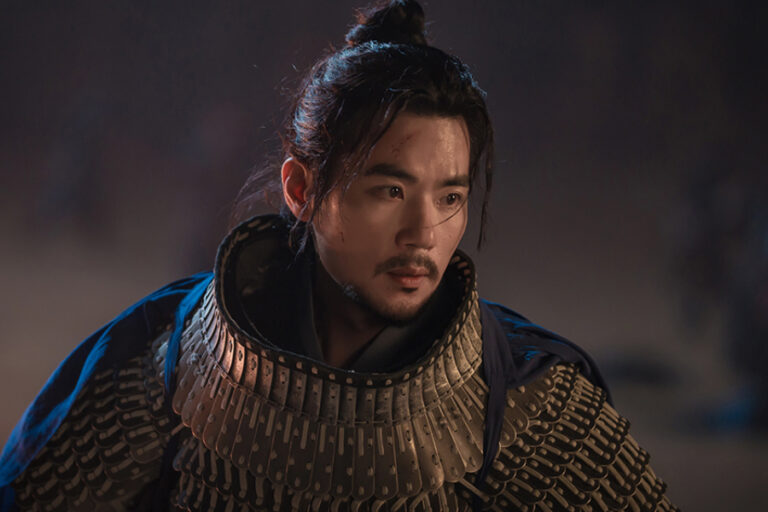
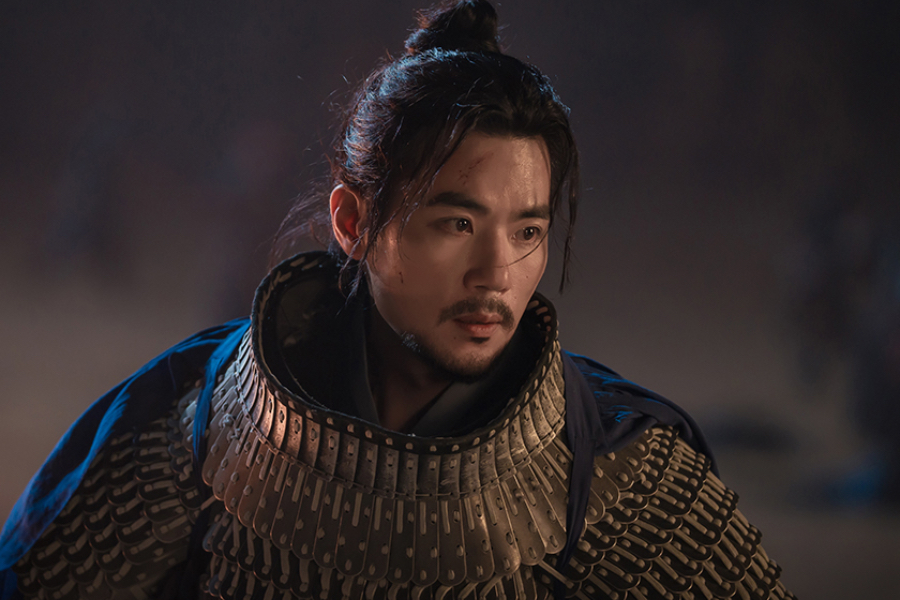
Promotional materials released by the production offer visual glimpses into Kim Chun Chu at various points in this journey. The images capture him in contrasting circumstances: navigating tense diplomatic encounters where stakes are personal and potentially fatal, moving through chaotic battlefields, wrestling with political crises that demand immediate decision-making. What remains constant across these varied scenarios is his composure. His gaze is fierce yet controlled, commanding yet measured. These qualities suggest a man who has learned to mask uncertainty, conceal fear, and project confidence even when facing circumstances where one miscalculation could prove catastrophic.
The performance role demands versatility. Kim Kang Woo must portray Kim Chun Chu in both modes: the careful political calculator who weighs every word and action against potential consequences, and the visionary leader confident enough to pursue aims that most would consider impossible. The character must appear dangerous to opponents—someone who cannot be out-maneuvered or intimidated—while simultaneously remaining recognizably human in his anxieties and doubts. Diplomatic negotiations with hostile powers alternate with scenes of military strategy and personal conflict, yet throughout, the character maintains the iron composure that survival has taught him.
Production and Premiere
Director Kim Yeong Jo brings previous experience with Korea’s classical historical periods to this project, having explored similar terrain through his work on “Hwarang: The Poet Warrior Youth.” “The Great King Munmu” will premiere on November 14 at 9:20 p.m. KST, launching the series that traces how one man’s political evolution parallels and enables his nation’s transformation from a kingdom fighting for survival into the unified power that would dominate the peninsula.
Source: Soompi
Frequently Asked Questions
Who does Kim Kang Woo play in 'The Great King Munmu'?
Kim Kang Woo plays Kim Chun Chu, a shrewd political strategist who rises from being a social outsider opposed by Silla's ruling elite to become the kingdom's 29th king, Taejong Muyeol.
What does the phrase 'Survival in the present is victory in the future' mean?
This is Kim Chun Chu's guiding principle—rather than seeking immediate victory or glory, he prioritizes ensuring Silla's continued existence, understanding that survival today enables greater ambitions tomorrow.
When does 'The Great King Munmu' premiere?
'The Great King Munmu' premieres on November 14 at 9:20 p.m. KST, directed by Kim Yeong Jo, who previously directed 'Hwarang: The Poet Warrior Youth.'
