
Key takeaways
- Happy Anding follows three comedians who spent a decade pursuing success in comedy while working irregular jobs and supporting each other emotionally.
- Kang Hoon, Cho Hyun Chul, and Kim Jung Jin developed genuine rapport during filming, starting as introverts who grew comfortable enough to bond like longtime friends.
- The series centers friendship as a form of sustenance during prolonged difficulty rather than treating failure as a momentary setback leading to triumph.
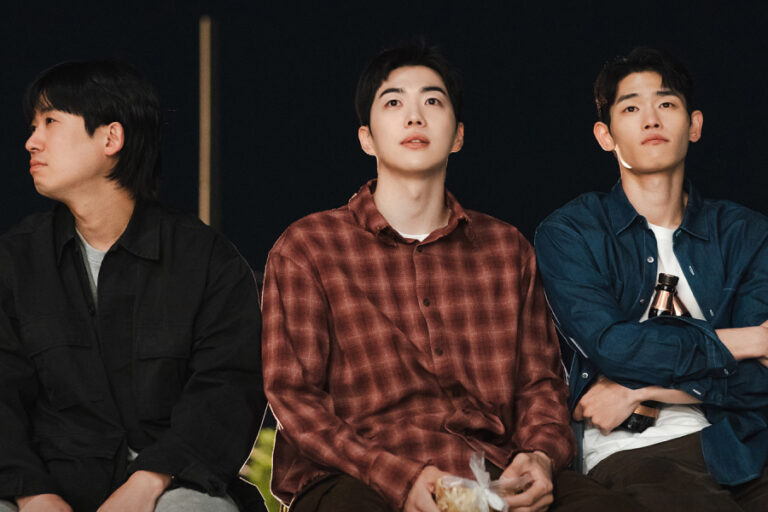
tvN’s upcoming “Happy Anding” follows three comedians who have spent the past decade pursuing their ambitions with minimal success in the entertainment industry. The drama contrasts their high school years, when they showed genuine promise, against their present circumstances, marked by financial strain and unfulfilled dreams. An encounter with a mysterious woman prompts them to reconsider their paths forward.
The cast features Kang Hoon in the role of Kang Tae Gu, Cho Hyun Chul as Kim Nam Il, and Kim Jung Jin as Han Jun Seo. Lee Seo Hwan appears as Jung Man Sik, a former high school teacher. The series premieres on tvN on November 11 at 10:50 p.m. KST.
Contrasting Timelines
New production stills released by the network offer a first glimpse of the characters across both time periods. During their high school years, Kang Tae Gu and Kim Nam Il exhibited innate comedic abilities, their confidence in their talent for eliciting laughter creating a competitive dynamic between them. Han Jun Seo took a different trajectory, positioning himself as the model student and serving as student representative.
The three formed a performance collective under the stage name Asura and initially garnered attention as promising newcomers within the comedy scene. Industry observers regarded them as talent with real potential to establish lasting careers.
The present day segments reveal how those early prospects have evolved over a decade. Kang Tae Gu now spends his days handling phone calls, his expression suggesting the weight of unfulfilled ambition. Kim Nam Il has found work as a parking attendant, a position far removed from the comedy stage. Han Jun Seo works at a skewer restaurant managed by Jung Man Sik, the same teacher who supervised him during high school. Despite the gap between youthful expectation and current reality, the three continue to support one another emotionally and practically, neither fully abandoning their comedic aspirations nor achieving them.
Kang Hoon’s Perspective
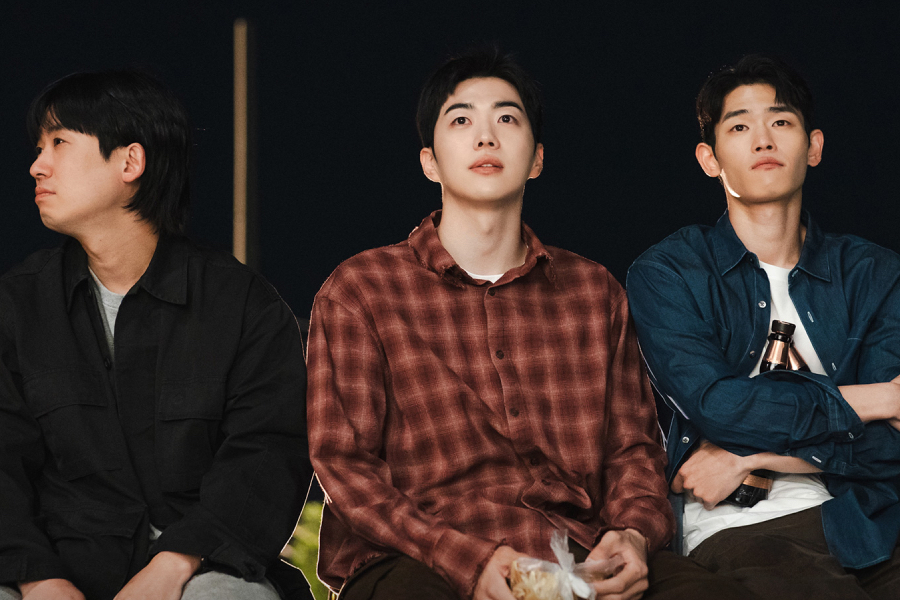
Kang Hoon articulated his immediate attraction to the project. After reviewing the script, he expressed an unambiguous commitment: “After reading the script, I wanted to be part of it without a moment’s hesitation. What appealed to me most was that it tells the story of young people who overcome their pain and grow.”
His observations about the Asura collective reveal insight into the narrative’s emotional core. “They may not have much, but their eyes are full of life. Their passion for their dreams is clearer and more intense than anyone else’s.” This characterization suggests that the drama does not locate value in external markers of success—income, status, industry recognition—but instead in the persistence of desire itself, maintained despite circumstances that might justify abandonment.
Forging On-Set Chemistry
Moving Past Initial Reserve
Kang Hoon described the early phases of filming: “We’re all introverts, so we were initially shy around one another, but we grew closer as filming went on. At some point, we started getting along like friends who had known each other for years.”
This gradual shift from wariness to ease mirrors the narrative arc of the characters themselves. Their own experience of bonding through sustained exposure parallels the fictional friendship their characters maintain through shared hardship. The authenticity of their rapport likely translated to performances that feel lived-in rather than constructed for the camera.
Cho Hyun Chul’s Craft Approach
Cho Hyun Chul spoke to his interpretation of the script and his deliberate choices as an actor. He identified the narrative’s refusal of easy resolution as one of its defining characteristics: “doesn’t offer hasty comfort and instead conveys the message that it’s okay to fail.” The drama presents failure not as a momentary setback leading to eventual triumph, but as an ongoing condition that characters must navigate and accept.
He described the emotional architecture of the three-person dynamic: “friends who keep walking the same path together, for better or worse.” This phrasing captures the non-transactional nature of their bond—they remain connected not because they expect the friendship to generate success, but because the friendship itself becomes the point.
Cho Hyun Chul elaborated on his performance methodology, emphasizing specificity of execution: “I paid a lot of attention to how we exchanged lines and emotions to capture the feeling of friends who have spent a long time together.” Rather than relying on broad gestures of camaraderie, he focused on the accumulated small moments—glances, overlapping dialogue, shifts in tone—that convey intimacy built through duration.
He credited Kang Hoon’s contribution: “Kang Hoon is such a funny person that we clicked right away.” He also noted an unexpected source of deepening attachment: “We also got scolded by Kim Jung Jin at times, which made me grow quite attached to him.” The willingness to challenge each other, rather than maintain only affirmation, appears to have strengthened their bonds.
Kim Jung Jin’s Emotional Entry
Kim Jung Jin connected with the material on a visceral level. Upon reading the script, “When I first read the script, I empathized so deeply with the characters’ emotions that I cried.” This immediate emotional recognition suggests the narrative taps into experiences of deferred ambition that resonate beyond the specifics of the comedy profession.
He articulated the relational quality of the trio’s bond with precision, moving beyond surface-level friendship: “Although they met as friends, they share and understand feelings that one might normally associate with family.” Family bonds often transcend choice—people remain connected through obligation and time rather than ongoing mutual selection. By positioning their friendships as family-like, he emphasizes their durability and the depth of mutual understanding that builds through years of shared struggle.
Learning Within the Ensemble
Kim Jung Jin extended reflections on what he absorbed from his co-actors: “Kang Hoon had many qualities of a leader, and I learned a lot from watching Cho Hyun Chul act boldly while still controlling the direction and scope of his performance to suit each situation.” This observation highlights contrasting strengths—Kang Hoon’s capacity to hold space for the group, Cho Hyun Chul’s ability to command attention while remaining responsive to the ensemble. Each actor’s presence contributed to the others’ development both personally and professionally.
Broadcasting Premiere
“Happy Anding” will reach audiences beginning November 11 at 10:50 p.m. KST on tvN. The series positions itself within the coming-of-age drama landscape through its focus on adult characters reassessing their choices and commitments rather than teenagers navigating first experiences. By training attention on friendship as a form of sustenance during prolonged difficulty, the narrative addresses a particular emotional and social experience rarely centered in entertainment narratives.
Source: Soompi
Frequently Asked Questions
When does Happy Anding premiere?
Happy Anding premieres on November 11 at 10:50 p.m. KST on tvN.
Who stars in Happy Anding and what are their character names?
The drama stars Kang Hoon as Kang Tae Gu, Cho Hyun Chul as Kim Nam Il, and Kim Jung Jin as Han Jun Seo, with Lee Seo Hwan as Jung Man Sik, a former high school teacher.
What is the premise of Happy Anding?
Happy Anding is a coming-of-age drama following three comedians who have spent 10 years struggling to achieve success in the entertainment industry. The story contrasts their promising school days with their present circumstances, where they work in various jobs while maintaining their friendship and comedic aspirations. After meeting a mysterious woman, they seek new directions in their lives.
