
Key takeaways
- BL genre explores crushes through multiple distinct lenses, from unbearably painful unrequited pining to bold direct confessions and strategic maneuvering.
- "Theory of Love" presents an unflinching portrayal of three-year unrequited attraction, with Gun and Off delivering chemistry that anchors the emotional weight.
- Two Japanese dramas invert the crush dynamic entirely, centering stories on protagonists who discover or fail to realize they are being pursued rather than pursuing others.
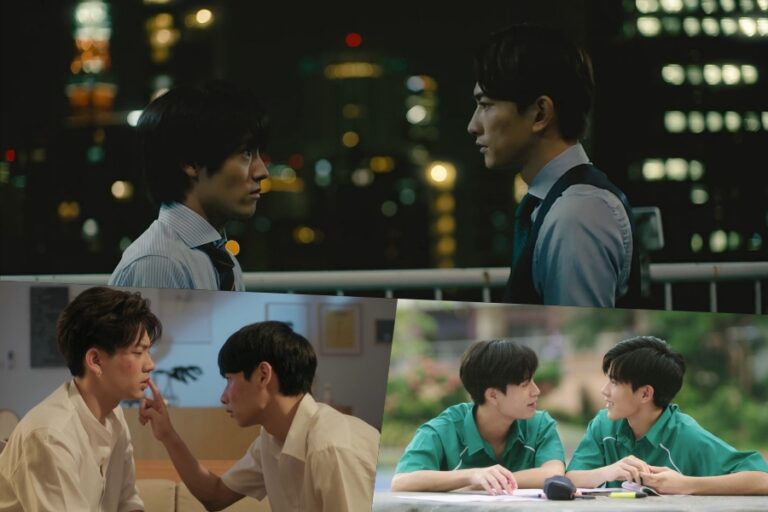
The BL genre has a particular talent for exploring the messy, complicated landscape of crushes: the excitement and agony of liking someone, the gap between reality and fantasy, the way attraction can cloud judgment and inspire both tenderness and foolishness. Whether you’re nursing unrequited feelings or curious about how different personalities navigate romantic interest, these five dramas showcase why the genre excels at storytelling around desire and longing.
When a Crush Becomes Painfully Real
“Theory of Love,” released in 2019, remains a touchstone for Thai BL despite its age. Gun Atthaphan Phunsawat plays Third, a university student whose three-year crush on best friend Khai (Off Jumpol Adulkittiporn) has become the defining feature of his emotional life. By the time the drama begins, Third, Khai, and two other friends form the film-student crew known as “the gangsters” on campus. Third’s feelings arrived early and never left, but three years of proximity have taught him only disappointment.
A Fundamentally Unsuitable Attraction
What makes Third’s situation particularly painful is that Khai is fundamentally unsuitable as a romantic interest. Khai has a personal rule against dating friends, which would be reasonable except that he barely observes it in practice. He cycles through relationships weekly, always choosing attachments with no emotional stakes. More importantly, he treats Third carelessly, using him and causing hurt without apparent regard. Yet Third remains fixated on the rare, good moments between them—the crumbs of kindness that keep him emotionally bound to someone who doesn’t deserve his loyalty.
The Question at the Heart
The drama’s central conflict emerges when one of Third’s friends accidentally discovers his secret. This knowledge pushes Third toward acceptance and moving on, but his friend volunteers to help him actually win Khai’s heart. The story becomes a question neither character can answer at the outset: is Khai worth the effort, and can someone who has shown so little regard for Third’s feelings ever become better?
Why It Resonates
According to Soompi, the series features top-tier chemistry between Gun and Off, lending a nostalgic quality that sets it apart from more recent Thai BL productions. What distinguishes “Theory of Love” is its refusal to romanticize the crush. The attraction is presented as largely painful, messy, and private. Third carries the weight alone for much of the narrative because no one truly understands what he’s experiencing. Khai is deliberately unlikeable for extended stretches, and his redemption, when it arrives, takes genuine time and effort. The drama requires tissues because it treats unrequited love as the exhausting, heartbreaking thing it often is.
The Confession That Changes Everything
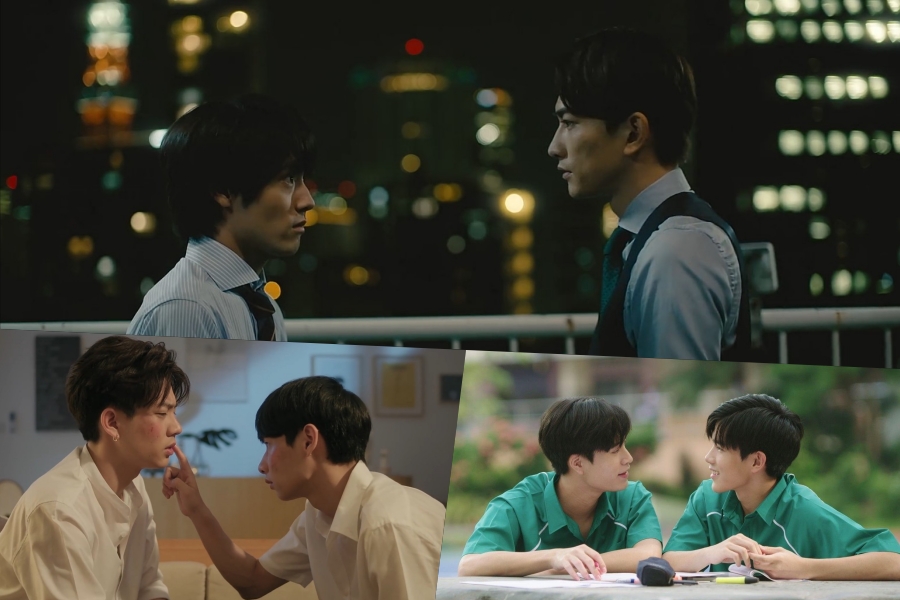
“After Moving Seats, the Boy Behind Me Has a Crush on Me” establishes its premise with elegant simplicity: a classroom seating adjustment places Mayama Hare (Konishi Eito), a self-proclaimed loner, next to Asamiya Kosei (Gennosuke), the school’s handsome, composed popular student. Mayama has spent his high school years in deliberate isolation, asking nothing of his peers and expecting nothing in return. The seating change should change nothing.
Then Asamiya hands him an assignment with a note containing three words: “I like you.”
Mayama’s first reaction is logical confusion—the note must be intended for someone else. Asamiya wastes no time clarifying. The confession is direct, unambiguous, and delivered without dramatic buildup or extended tension. What follows is Mayama trying to process how a student he barely knows could harbor feelings for him, while Asamiya pursues the relationship with straightforward honesty and consistency.
A Fresh Approach to Romance
According to Soompi, this series stands out for its commitment to good communication, a quality rarer in the BL genre than one might hope. The narrative eschews manufactured conflict and melodrama in favor of two people learning to know each other. It serves as a practical lesson in directness, in asking for what you want, in accepting rejection gracefully if it comes. The result feels refreshing: a BL that prioritizes charm and genuine connection over plot contrivance.
The Crush That Hides Behind Strategy
“My School President” centers on Tinn (Gemini Norawit Titicharoenrak), a model student and academic achiever who has spent years harboring feelings for Gun (Fourth Nattawat Jirochtikul), a classmate existing in an entirely different social sphere. Gun anchors the school’s music club, leading a group of rule-breakers united by their commitment to their craft. Tinn’s attempts to be near Gun have consistently failed—his orderly, buttoned-up approach holds no appeal to someone like Gun.
An Unexpected Opportunity
The turning point arrives when Tinn’s mother, who serves as principal, announces plans to disband clubs deemed non-essential to academic performance. The music club is on the chopping block. Recognizing that the student council president holds authority over club survival, Tinn devises a plan: run for student council, win, and save Gun’s beloved club. It’s a gesture of protection disguised as political ambition.
A Rivalry Born from Misunderstanding
The complication intensifies when Gun enters the same race, having reached identical conclusions about how to preserve his club. Tinn’s victory creates an unexpected result: Gun believes Tinn is his rival, that Tinn intends to destroy him and his community. For Tinn, this is both a catastrophe and an opportunity—now he can be close to Gun, even if Gun misunderstands his motivations entirely. Keeping his real feelings secret while performing the role of rival becomes the central tension.
Why It Works
According to Soompi, the series combines excellent music from the school band, a deep ensemble cast, multiple side relationships, and consistently strong chemistry between Gemini and Fourth. The leads have demonstrated their compatibility in other projects together, including “Ticket to Heaven” and “My Love Mix-Up!” The result is a drama that remains unexpectedly funny and warm while exploring what it means to care deeply for someone and keep that care hidden.
Popular Serizawa Acts Weird Around Me: The Oblivious Perspective
“Popular Serizawa Acts Weird Around Me” follows Suzuki Hajime (Koizumi Kosaku), an introverted, socially isolated boy whose primary outlet is writing BL in the library’s quietest corner. He maintains this secret life carefully, aware that exposure would invite ridicule. His anonymity shatters when Serizawa Haruto (Shisaka Ryoto), the school’s most attractive and socially accomplished student, discovers Suzuki’s journal and finds himself as the primary character in Suzuki’s fictional narratives.
Rather than reacting with anger, Serizawa responds with delight. His discovery reveals a second layer: Serizawa has been observing Suzuki from a distance and was already interested. Finding the journal provides the opening he needed. He asks to read the ongoing story, positioning himself as both reader and subject. Suzuki remains largely oblivious to what’s happening, and the drama traces their connection through a series of near-misses and small misunderstandings that ultimately deepen their bond. According to Soompi, the series carries the tone and spirit of other Japanese BLs like “Takara-kun & Amagi-kun” and “School Trip: Joined a Group I’m Not Close To.” The satisfaction emerges from watching Suzuki’s gradual awareness develop across a journey that feels hard-won rather than easy.
Cherry Magic!: When the Roles Reverse Completely
“Cherry Magic! Thirty Years of Virginity Can Make You a Wizard?!” presents a dramatic inversion of the typical crush narrative. Adachi Kiyoshi (Akaso Eiji) is a 30-year-old virgin who discovers on his birthday that decades of isolation have granted him magical powers: the ability to read thoughts through physical touch. When he accidentally brushes against his office colleague Kurosawa Yuichi (Machida Keita) in an elevator, the power reveals something unexpected: Kurosawa harbors a secret attraction to him. Adachi, who viewed Kurosawa as an untouchable figure of perfection, must now navigate the shock of being desired by someone seemingly unreachable.
According to Soompi, this iconic and foundational Japanese BL offers the unusual perspective of being the object of affection rather than the pursuer. Adachi’s confusion and the role reversal give the crush story a fresh angle. For audiences following Akaso Eiji’s career, the drama serves as a strong entry point before his upcoming film “One Year to Live, Buy a Man.”
Source: Soompi
Frequently Asked Questions
Is "Theory of Love" still worth watching despite being released in 2019?
Yes. Despite the 2019 release date, Soompi recommends it as an essential Thai BL viewing experience. The series is praised for its nostalgic quality, top-tier chemistry between Gun Atthaphan Phunsawat and Off Jumpol Adulkittiporn, and its honest portrayal of unrequited love as painful and messy rather than romantic.
What makes "After Moving Seats, the Boy Behind Me Has a Crush on Me" stand out from other BL dramas?
According to Soompi, the series distinguishes itself through its commitment to good communication and lack of manufactured drama. The direct confession arrives without buildup, and the narrative centers on two people learning to know each other honestly rather than creating conflict through misunderstandings.
Which dramas show the perspective of being crushed on rather than having the crush?
"Popular Serizawa Acts Weird Around Me" and "Cherry Magic!" both reverse the typical dynamic. In "Popular Serizawa," Suzuki is largely oblivious to Serizawa's interest. In "Cherry Magic!", Adachi discovers through mind-reading powers that someone he viewed as untouchable actually harbors feelings for him.
